Tokyo Line by Line: Where to Live on the Toyoko
Choosing where to live in Tokyo typically starts with choosing a train line and a station. I spent a day visiting six stops on the Toyoko Line to see what each neighborhood is really like, and what it costs.
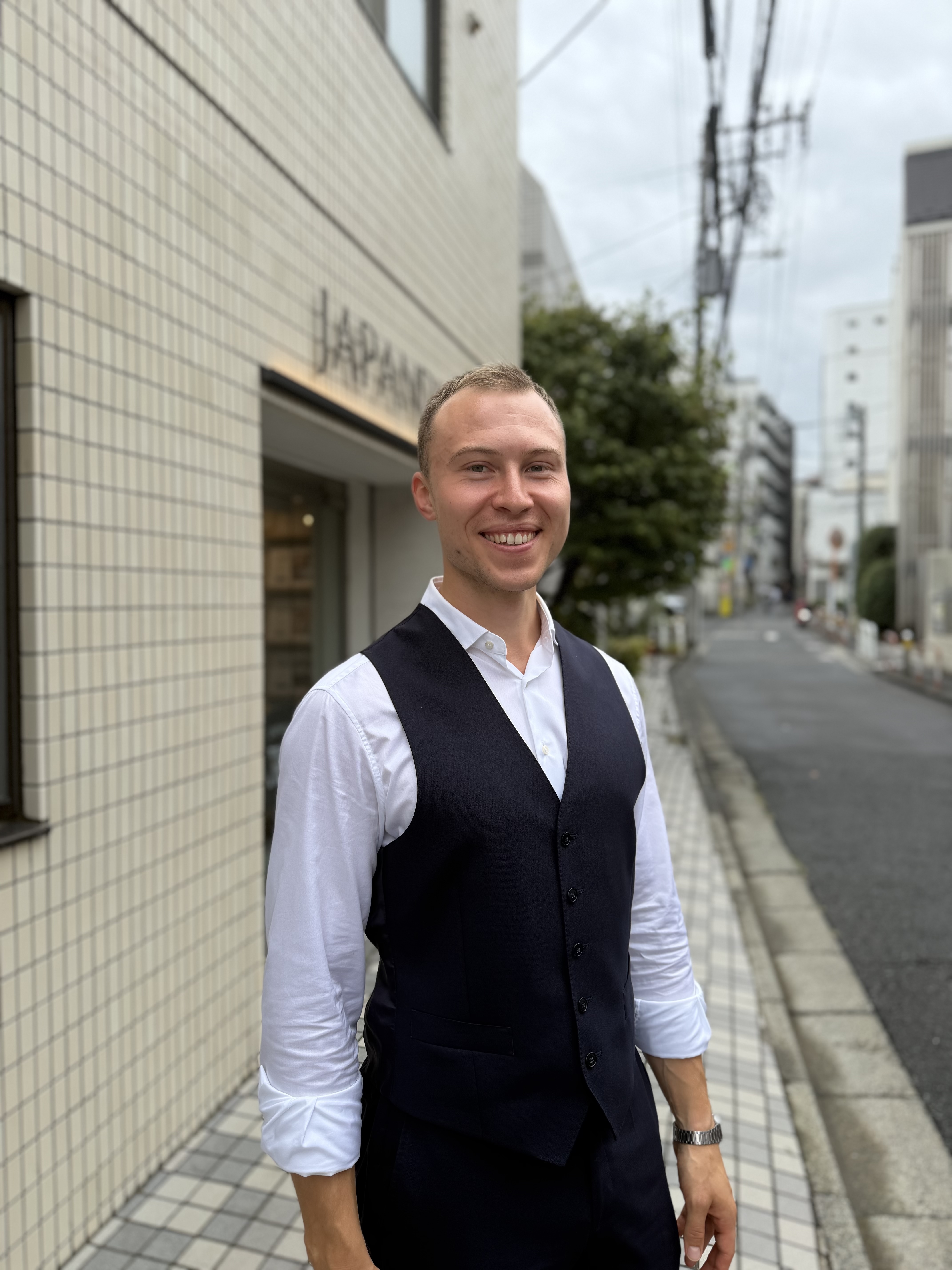

When I started looking for an apartment in Tokyo earlier this year, it's fair to say that I was confused by the search filters on pages like SUUMO and Real Estate Japan. One of the first choices you make when searching for a place in Tokyo is exactly that: a train line or a specific train station.
In the biggest city in the world with the most complex railway network anywhere on the planet, especially to someone who's never lived in Tokyo before, trying to find a new home by choosing train lines felt close to impossible. How should I know what train lines I prefer, and how should I know how liveable they are?
But now that I've lived here for a little while and gotten to know Tokyo through my work at Japandi, I've come to understand why this type of filter can be very useful. In a city like Tokyo, accessability and convenience are often at the top of people's priority lists, which is often measured by the distance to a specific train station.
That's why a series of guides covering some of the most popular train lines in Tokyo could be useful to people who were in the same situation as me a couple of months ago.
Thus, I spent a day visiting six stops on the Toyoko line, which runs from Shibuya all the way down to Yokohama station in Kanagawa, to get a feel for what it would actually be like to live there. Here is what I found; from the busiest, to the quietest, to the most expensive stops.
1. Nakameguro: the lively one

Nakameguro tops the charts when it comes to liveliness.
Shops, bars and restaurants run right alongside the tracks and underneath them, with a variety that caters to most peoples needs.
This strip of stores along the tracks is called Nakameguro Koukashita, a commercial space built into the elevated railway. Tokyu and Tokyo Metro opened it in November 2016, and it stretches about 700 m from the Meguro River toward Yutenji. It is a big reason the area feels so new and "hip" today.
Good for: people who want restaurants, nightlife and a quick ride into Shibuya on their doorstep.
- Coffee: ONIBUS COFFEE, about five minutes' walk from the station.
- Food: the Koukashita strip alone has around 30 shops, from craft beer bars to bistros. You'll have no problem finding something that caters to your tastes.
- Dogs: Nakameguro park and the Meguro river offers great places for walk and play.
2. Yutenji: small, quiet and local
One stop further and the mood changes quite radically. Yutenji is small, cute and clearly residential, with less going on than Nakameguro. You trade variety for peacefulness.
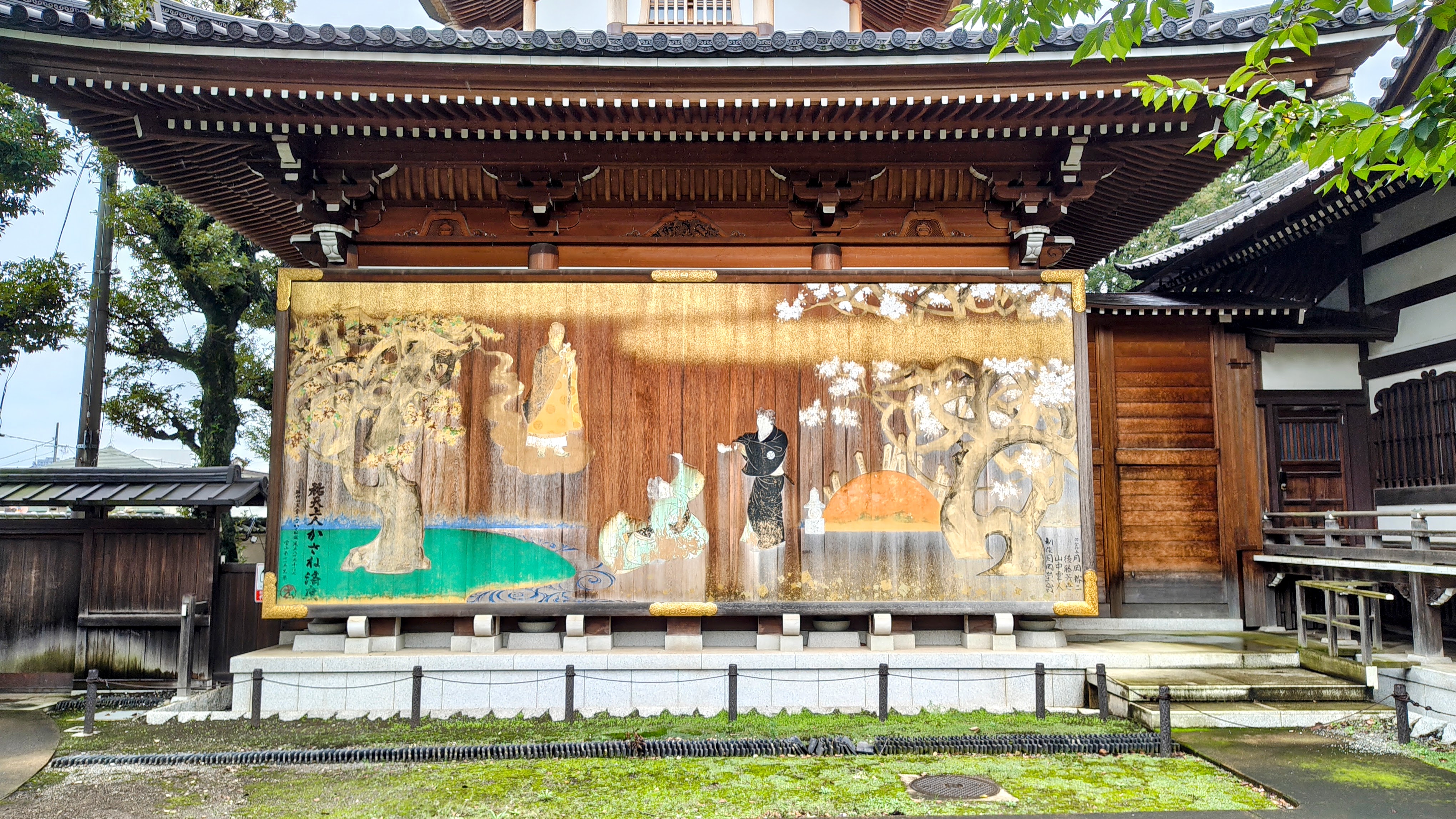
The station is named after Yutenji temple, a Jodo Buddhist temple founded in 1718 and a short walk from the station. Of course, I had to go and visit, and I was not dissappointed. Beatifully preserved and still used today for different ceremonies.
Riding my bike along the train tracks, I also spotted a couple of empty, abandoned-looking houses. Even in one of Tokyo's most desirable wards, akiya are hiding in plain sight..
Good for: people who want a quiet, local base one stop from Nakameguro with slighlty lower prices.
- Coffee: SIDEWALK COFFEE YUTENJI, an offshoot of a well-known Nakameguro shop, bakes its own bread and pours craft beer too. kuku cafe is a quieter option about five minutes from the station.
- Food: ALLEY CATS, three minutes from the station, for burgers and toast. RAINBOW BIRD RENDEZVOUS for a fully plant-based menu.
- Dogs: Not a lot of traffic which makes walking around the neighborhood easy and relaxed, but also not a lot of green spaces (except for the temple grounds, where dogs are not allowed).
3. Gakugei-daigaku: my favorite
If I had to pick one stop to live at, it would be Gakugei-daigaku. It has the right mix: lively enough to be fun, relaxed enough to feel like home.
The café scene is excellent. My highlight was LAZZY cafe, which was every bit as good as it looked. I ordered a cafe latte and a scone, and just sat for a while looking at people passing by (ningen kansatsu, 人間観察) and feeling the vibe. It was definitely vibing.

About a 7-minute walk away is Himonya Park, one of the oldest parks in Meguro, opened in 1933. At its center is Benten Pond, once an irrigation pond for the village rice fields. On a small island in the pond sits Itsukushima Shrine, reached by an arched bridge.
A fun fact: the station is named after Tokyo Gakugei University, which moved out to Koganei back in 1964. The university left, but the name stayed.
Good for: almost anyone, but especially café lovers and young families who value having good access to parks and other places to spend time during days off.
- Coffee: LAZZY cafe (see above).
- Food: El Rosello for Barcelona-style paella, Stand Bánh Mì with its own homemade pâté, and Lodge Bistro SARU for grilled game meats at dinner. All are within a few minutes of the station.
- Dogs: Himonya Park's pond loop for walks. Dogs are allowed inside at EMPORIO, cafe&dining, L.A.GARAGE3 and GOOD CHEESE GOOD BAKE.

4. Toritsu-daigaku: a university station without a university

Toritsu-daigaku felt busier, with more of a big-city energy around the station.
The name has a similar story to Gakugei-daigaku's. The station opened in 1927 as Kakinokizaka and was renamed in 1952 after Tokyo Metropolitan University. The university moved to Hachioji in 1991, and the name stayed here too.
The old campus did not disappear, though. Today it is the Meguro Citizens' Campus, with a park, a library, a sports center and Persimmon Hall. The park has a wide lawn and a small stream, and is a great place to take a break.
Good for: people who want a bit more buzz, with green spaces close by.
- Coffee and bakeries: this is bread country. Toshi Au Coeur du Pain, two minutes from the station, is known for its baguettes. TRASPARENTE, right by the station, is a bakery-café where you can eat in. Quatre in Kakinokizaka is famous for its egg-shell pudding.
- Food: Tanaka Sushi, Excellent Omakase at night.
- Dogs: the lawns at the old campus park, with Komazawa Olympic Park within reach for longer walks.
5. Jiyugaoka: trendy, with a European twist
Jiyugaoka has a vibe all its own. It is trendy and polished, and the streets have an almost European feel compared to the other stops.
I spent some time in JIYUGAOKA de aone, a shopping center opened by Aeon Mall in October 2023. It feels more like a park than a mall: greenery on every level, plus a roughly 1,000 m² garden terrace on the third floor, decked in Tama-grown hinoki wood.
The site has a famous past, too. de aone stands where Tomoe Gakuen once was: the school Tetsuko Kuroyanagi attended, and the setting of her bestseller Totto-chan: The Little Girl at the Window.
Jiyugaoka has drawn creative people since the 1920s. Dancer Baku Ishii campaigned to give the station its "Jiyugaoka" name, and writers Tatsuzo Ishikawa and Yojiro Ishizaka both lived here. Today, singer Nanase Aikawa has spoken openly about living in Jiyugaoka for 30 years and calling it her hometown.
Jiyugaoka is also where the Toyoko Line meets the Oimachi Line, which makes it an easy hub for getting around. The famous Jiujutsu club Carpe-Diem has one of their more popular gyms here, popular among foreignares and locals.
Good for: people who love shopping, design and a slightly more international atmosphere.
- Coffee: LATTE GRAPHIC, right by the station, for Australian-style café food.
- Food: SHUTTERS, on the Kuhonbutsugawa promenade, is known for spare ribs and apple pie.
- Dogs: the most dog-friendly stop on the line. The tree-lined Kuhonbutsugawa promenade is a classic walking route. LATTE GRAPHIC and SHUTTERS both allow dogs on their terraces. DOG SIDE Lounge, opened in October 2025, lets dogs inside.
6. Denenchofu: Tokyo's garden city
Denenchofu feels very different than the rest of the stations. It's got a quiet, luxury feel with a unique layout; step out of the west exit and the streets fan out from the station in a radial pattern, crossed by curved, concentric roads.
That layout was planned in 1918 by industrialist Eiichi Shibusawa and his Garden City Company, who developed the area on Ebenezer Howard's British "garden city" idea. After the 1923 Great Kanto Earthquake, many people moved here from the damaged city center, and it grew into one of Tokyo's most exclusive neighborhoods.
Today you see the result: tree-lined streets, hedges instead of walls, and very big houses with accompanying price tags. The area also has its own building rules to protect that character.
It's also Tokyo's classic celebrity address. After the war, big names like baseball legend Shigeo Nagashima and author and former Tokyo governor Shintaro Ishihara made their homes here. In the 1980s, the comedy line "Den-en-chofu ni ie ga tatsu!" ("I'll build a house in Denenchofu!") became shorthand for making it big.
Good for: anyone who wants space, calm and greenery, and don't mind paying for it.
- Coffee: Pelican Coffee, one minute from the station, in a renovated old house. It opens at 7:30.
- Food: Metzgerei Sasaki, two minutes from the station, for German and French cooking. Rasan, three minutes away, for Cantonese.
- Dogs: quiet, green streets for walking. Tamagawa Diner by the Tama River has a big terrace popular with dog owners.
What does land cost?
Per square meter, Denenchofu is actually the cheapest stop on this list. Jiyugaoka is the most expensive.
Average official land price in 2026, and the change since 2025:
- Nakameguro: ¥2,450,000/m² (+14.3%)
- Yutenji: ¥1,140,000/m² (+14.0%)
- Gakugei-daigaku: ¥1,320,000/m² (+11.7%)
- Toritsu-daigaku: ¥1,280,000/m² (+12.7%)
- Jiyugaoka: ¥3,410,000/m² (+14.3%)
- Denenchofu: ¥970,000/m² (+7.4%)
The figures average the official survey points (kōji chika) around each station. They include shopping-street plots, which pushes Nakameguro and Jiyugaoka up.
So why are Denenchofu homes so expensive? The plots are huge. One official survey point near the station is 930 m², and the rules there let a house cover only 40% of its plot. You pay less per square meter, but you buy a lot more square meters.
Prices also rose more than 10% in a single year at every Meguro stop. Land on this line is getting expensive fast.
Tip for dog owners: many Tokyo rentals don't allow pets. Filter for ペット可 (pets allowed) when you search.
Renting first? Read why renting in Tokyo is so hard for foreigners, and what to do about it. Ready to buy? Start with our step-by-step guide to buying an apartment in Japan.
Which stop is right for you?
- Nakameguro: lively, hip and busy. Best for food, nightlife and quick Shibuya access.
- Yutenji: quiet, residential and local. Best for a calm base near Nakameguro.
- Gakugei-daigaku: cafés, a park and a good balance. Best for almost anyone, and my top pick.
- Toritsu-daigaku: busier, with a big-city feel. Best for buzz plus big green spaces.
- Jiyugaoka: trendy, with a European feel. Best for shopping and design lovers.
- Denenchofu: spacious, green and exclusive. Best for large homes on a large budget.
Even though the train stops are not too far apart, just one stop can completely change the scenery and how liveable it is for you personally.
This is the first guide in our Tokyo Line by Line series, so stay tuned for the next line.
With Real Estate prices constantly rising, and the more central stop Nakameguro generally being more expensive, many of our clients seem to enjoy the vibes of the few stops further down the line - Still walkabkle or bikeable to Nakameguro and a bit more affordable.
Want new guides and market insights straight to your inbox? Subscribe to our newsletter on the side of this page. And if you're coming to Tokyo to look at properties, stay in one of our restored homes at Japandi Houses, with houses in central neighborhoods like Sangenjaya, just a few minutes from Shibuya.
JAPANDI – Buy a Home. Make it Yours.
Axel Westholm is a Swedish student of forestry, wood technology, and sustainability, with a background in East Asian culture, history, and language. He is currently an intern at Japandi Real Estate.
Related Questions
Is Setagaya a good place to live in Tokyo?
We think so. Setagaya offers quiet residential streets, parks, great cafés, excellent schools, and easy access to central Tokyo — a strong balance for families and professionals alike.
What are the best neighborhoods in Tokyo?
There's no single perfect area — it depends on your lifestyle, budget, and priorities. We personally love neighborhoods like Sangenjaya, Yoyogi, Nakameguro, Meguro, Tomigaya, Shirokane, and Kagurazaka, while others prefer the energy of Shibuya, Akasaka, or Roppongi. If you're unsure where to start, visit our Sangenjaya office for a consultation.
What can I buy in Tokyo for ¥100 million?
Around ¥100 million, buyers gain access to bigger apartments, detached houses, and many of Tokyo's most desirable residential neighborhoods.
What can I buy in Tokyo for ¥200 million?
A ¥200 million budget opens the door to premium neighborhoods, larger family homes, and high-end apartments.
What rental yield should I expect in Tokyo?
Tokyo yields are usually between 3–5%, and sometimes lower in prime central areas. Returns vary widely depending on location, property type, financing, and whether the property is used for long-term or short-term rental.
Why is Sangenjaya so popular?
Sangenjaya has a unique mix of local charm, independent restaurants, good transport, and a relaxed atmosphere. It's also where our office is located, so we know the neighborhood exceptionally well.

Neighborhood Guide: The Best Places to Live in Tokyo
Choosing where to live in Tokyo often starts with choosing a ward. I compared five wards popular with foreigners: what each one is like, and what it actually costs to rent there in 2026.
Neighborhood Guide: The Best Places to Live in Tokyo
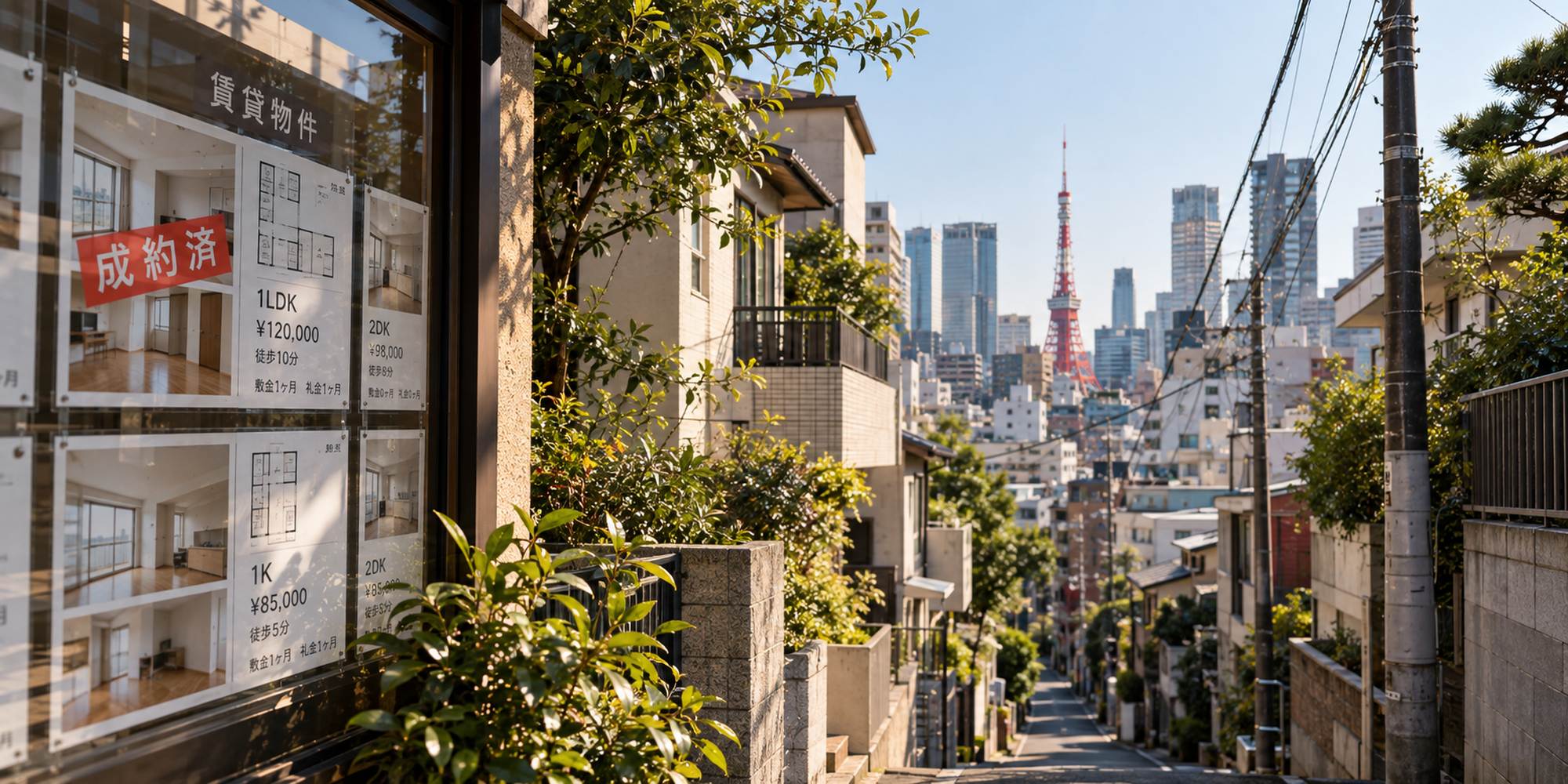
Why Renting in Tokyo is So Hard for Foreigners (And What to Do About It)
Fees, paperwork, guarantors, and apartments that vanish within days. What I learned trying to rent in Tokyo as a foreigner and working at a real estate company, and what to do when the standard route doesn't work.
Why Renting in Tokyo is So Hard for Foreigners (And What to Do About It)

How to Buy an Apartment in Japan as a Foreigner: A Step-by-Step Guide
Foreigners can buy apartments in Japan, but the building matters as much as the unit. Learn how to judge fees, repair plans and financing before you buy.
How to Buy an Apartment in Japan as a Foreigner: A Step-by-Step Guide
Ready to find your home in Tokyo?
Buying and renovating a home in Tokyo can feel overwhelming from the outside — especially for international clients. We make it clear, considered, and design-led from the very first conversation.
- 01.One team guiding you through every step
- 02.A clear path from first search to final result
- 03.Homes chosen for potential, not just listings
- 04.Scandinavian design meets Japanese craftsmanship
- 05.A trusted network of architects, designers, and builders