Why Renting in Tokyo is So Hard for Foreigners (And What to Do About It)
Fees, paperwork, guarantors, and apartments that vanish within days. What I learned trying to rent in Tokyo as a foreigner and working at a real estate company, and what to do when the standard route doesn't work.
Why Renting in Tokyo is So Hard for Foreigners - And What to Do About It
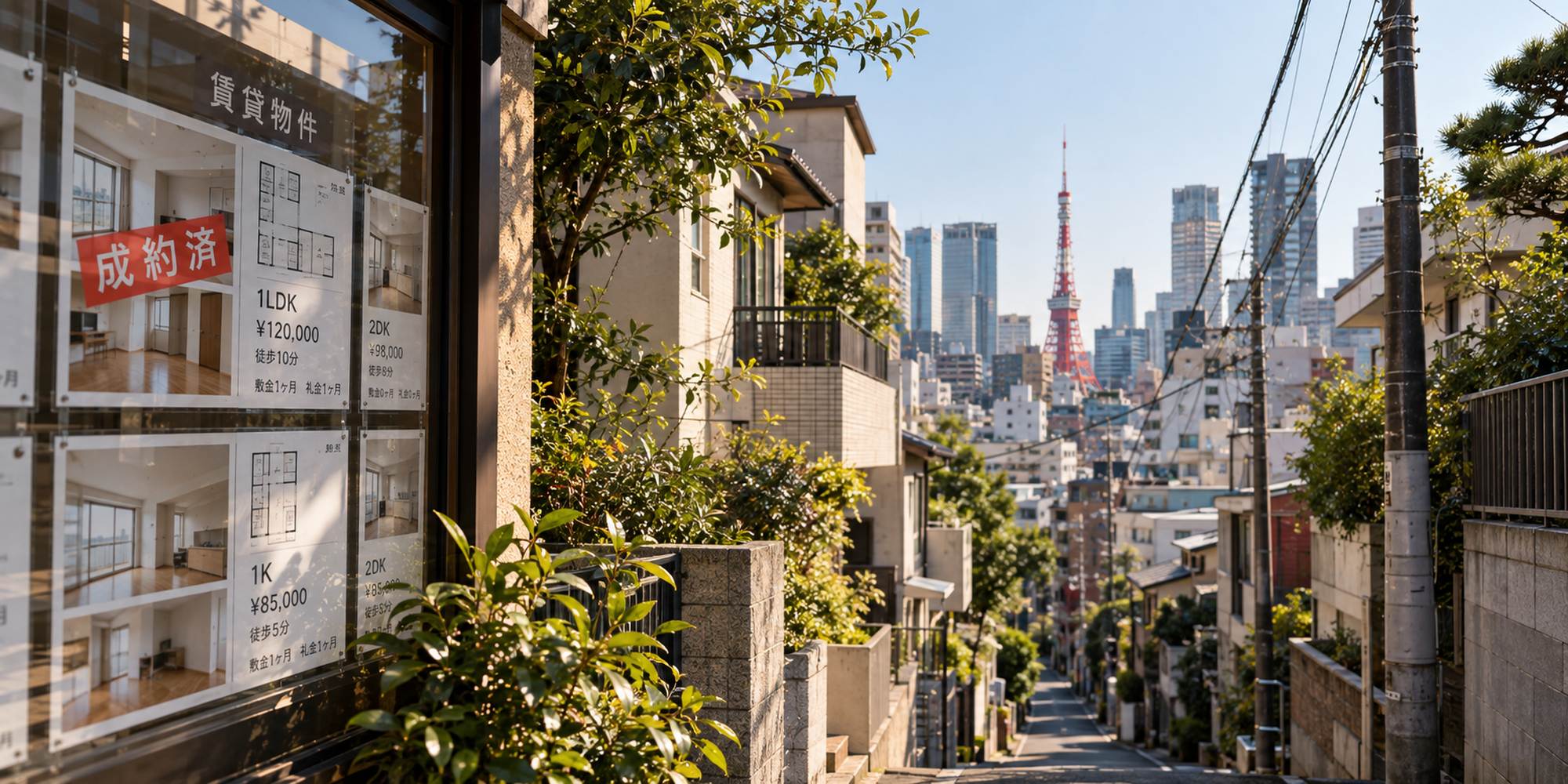
You've found the apartment. It's a ten-minute walk from the station, the rent fits your budget, and the photos look good. You email the agent. No reply. You call, and the listing is "no longer available," though it's still online the next day.
The next place accepts foreigners, but first you need a guarantor. The guarantor company wants a Japanese emergency contact, proof of income, a Japanese bank account and a phone number. The bank wants an address. The phone company wants a bank account. And the landlord wants all of it before they'll give you the address.
When you finally get an approval, the agent sends the bill: deposit, key money, agency fee, guarantor fee, insurance, lock change and the first month's rent. That's five months' rent before you've spent a single night there, and part of it is a "thank you" gift to the landlord that you'll never see again.
Welcome to renting in Tokyo!
I moved here in August for my internship at JAPANDI and started looking early, since I'd heard from Anton, our founder, and others that renting here can be a challenge. Even so, I didn't expect it to be quite as challenging as it was, and in the end I decided that a share house was the least headache-per-square-metre choice.
This guide covers what I learned both from trying to rent on my own and from my role at JAPANDI: how the system works, where it trips people up, and what to do when the standard route doesn't work for you.
Why renting is harder than it looks
Listings disappear fast
Tokyo doesn't lack apartments. Thousands are listed at any time. But coming from Sweden, I was surprised by how quickly they disappear. In Sweden, listings can stay up for weeks or months. Here, a good apartment can be gone within days, sometimes hours. Many landlords simply accept the first applicant who passes screening, and people often apply the same day as the viewing, many times without viewing the place in person.
Tenants usually give only a month's notice, so most apartments appear just a few weeks before they're free. That means you can't lock in a place months ahead. Many big International startups have a hard time finding apartments in Stockholm, the capital of Sweden, but a tiny city in comparison to Tokyo. Tokyo has an endless supply, Stockholm does not.
My Advice: Start looking about a month before you want to move, and be ready to decide quickly.
And if an agent tells you a listing you saw online "just went," it may be true, or it may never have been available at all. Outdated listings and bait listings (otori bukken, おとり物件) are a well-known problem.
Listings that don't accept foreigners
Even among the listings that are still available, not all are open to you. Some are openly marked 外国人不可 (gaikokujin fuka, "no foreigners"). Others turn you down quietly through the agent.
Landlords usually give reasons like language barriers, worry about noise and garbage rules, or the risk of a tenant leaving the country without paying. That last worry was reinforced for some landlords when many foreign residents left Japan abruptly after the 2011 earthquake and the Fukushima nuclear disaster, and many left without ever returning or even cleaning up their belongings, neither paying the last few months rent (rumor not confirmed but likely true..)
Whatever the reason, it's a real part of the market. The practical answer is to work with agents and services that already work with foreign tenants, so you don't waste time on listings that were never open to you.
The paperwork loop
Once you've found a place that accepts foreigners, you need the documents to apply. That usually means a residence card (zairyū card), a Japanese phone number, a Japanese bank account and proof of income or a job. The trouble is that each of these is easier to get once you have the other, and some of them are much easier to get once you have an address.
The guarantor problem
With the documents in hand, the next step is screening. Many landlords require a guarantor. In the past this was usually a family member living in Japan. Today it's mostly a guarantor company (hoshō gaisha, 保証会社), which screens you and promises to cover the rent if you don't pay.
For foreigners, this screening is often where applications fail. Short visa periods, a new job, income from abroad or no Japanese credit history can all count against you. Many guarantor companies also want an emergency contact in Japan, sometimes one who speaks Japanese.
The move-in costs
And if you're approved, the bill arrives. The move-in costs were one of the biggest shocks when I started looking at rentals. A typical Tokyo rental asks for some combination of:
- Deposit (shikikin, 敷金): Usually one to two months' rent. You get part of it back when you move out, minus cleaning and repair costs.
- Key money (reikin, 礼金): Often one month's rent, paid to the landlord as a "thank you." You don't get it back.
- Agency fee (chūkai tesūryō, 仲介手数料): Up to one month's rent plus tax, paid to the agent who arranges the lease.
- Guarantor company fee: Often 50–100% of one month's rent at the start, plus a yearly renewal fee.
- First month's rent, often plus the rest of the current month.
- Fire insurance: Usually required, around ¥15,000–20,000 for two years.
- Lock change fee: Often ¥15,000–25,000.
Added up, move-in costs of four to six months' rent are common. For an apartment at ¥100,000 a month, that means having ¥400,000–600,000 ready before you move in.
The costs keep coming after that. Many leases run for two years and charge a renewal fee (kōshinryō, 更新料), often one month's rent, if you stay longer. When you move out, you pay to restore the apartment to its original condition (genjō kaifuku, 原状回復), which usually comes out of your deposit. Rents themselves are also going up. We've previously written about why Tokyo rents are rising and what's behind it.
"Zero-zero" listings (no deposit, no key money) do exist. They often make up for it with higher rent, a fixed cleaning fee or a penalty if you leave early, so read the contract carefully.
Decide what you need first
Commute and train lines
When I first used Japanese property sites, one thing stood out: many of them let you search by train line and station instead of by neighborhood. I found this odd at first, but it makes sense once you've lived here a while and seen how central the trains are to getting around.
In Tokyo, people tend to think of where they live by their station, not their district. Asked where they live, most people will name a station. Employers also often pay commuting costs through a commuter pass (teiki, 定期) that covers a fixed route. So many people start with "which line gets me to work" and choose an apartment along that line.
It makes sense to do the same. Start from where you work or study, list the one or two lines that get you there directly, and search along them. A place 25 minutes away with no transfers is often better than one 15 minutes away with two changes.
Walking time to the station
Listings give walking time to the nearest station, often calculated at 80 meters per minute. That's roughly accurate but doesn't count waiting at crossings or hills. Rent tends to drop as the walk gets longer, so a 10–15 minute walk can be a good compromise.
Your surroundings
Tokyo streets can change a lot from one block to the next. Before you sign, check:
- Noise: Is the apartment next to train tracks, a main road or a row of bars?
- Smells: Restaurants on the ground floor are common, and so are their kitchen vents.
- Sunlight: South-facing units cost more for a reason.
- Garbage rules: Where is the collection point, and how strict is the building about sorting?
If you can, visit at night as well as during the day.
Things that surprise foreigners
- Empty apartments: Many rentals come without light fixtures, curtains, a fridge or a washing machine. Plan for these costs.
- Layout codes: 1R is one room. 1K is a room with a separate kitchen. 1DK adds a dining area, and 1LDK adds a living room. Sizes are often given in jō (畳, tatami mats), where one jō is about 1.6 m², and sometimes in heibei (平米, square metres).
- Building age: Buildings approved before June 1981 were built to older earthquake standards. Newer ones follow the stricter shin-taishin (新耐震) code. Older buildings are cheaper, but you should know which kind you're looking at.
- Utilities: You usually set up electricity, gas and water yourself. Gas sometimes needs a technician to visit and turn it on. Wifi is another hurdle.
- Contract language: Contracts are normally in Japanese. The agent must go through the important matters explanation (jūyō jikō setsumei, 重要事項説明) with you before you sign. Bring someone who reads Japanese if you don't.
Where to look, and how to apply
Where listings are
- Large Japanese portals such as SUUMO, HOME'S and at home have the most listings, mostly in Japanese.
- English-language agencies and rental companies such as Weave Living, Rental Japan and Palace Homes have fewer apartments, but most of them welcome foreign tenants.
- Local agencies near the station you want often have listings that never make it online.
Big companies vs. private landlords
Most Tokyo rentals are handled by management companies (kanri gaisha, 管理会社) for the owner, with an agent in between. That usually means fixed rules and standard screening, which can be a problem if you don't fit their checklist. Private landlords who rent directly are less common. They can be more flexible, but the terms are often less clear. Either way, what decides your application is the screening, not how friendly the agent is.
How to apply, step by step
- Inquiry: Contact the agent about a listing. Ask right away whether foreign tenants are accepted.
- Viewing (naiken, 内見): Visit the apartment, often on the same day.
- Application (mōshikomi, 申込): Fill in the form and hand over copies of your ID, residence card and proof of income.
- Screening (shinsa, 審査): The guarantor company and landlord review your application. This usually takes a few days to a week.
- Important matters explanation and contract.
- Payment of move-in costs.
- Keys, and you're in.
Plan for two to four weeks from first viewing to moving in.
What I've learnt at JAPANDI
Looking for an apartment while working at a company that deals with houses every day gave me two views of the same market. A few things changed how I see it.
Empty homes (Akiya) aren't the same as available homes. Japan has millions of vacant properties, and even Tokyo has a large number of empty units. Yet foreigners here still struggle to get approved for a studio. The problem isn't about supply. Although they exist in Tokyo as well, most akiya are in rural areas and never reach the rental market, and in the city, landlords with a decent apartment would rather wait for a "safe" tenant than take what they see as a risk.
Landlords are mostly avoiding risk, not foreigners. From the outside, rejections can feel personal. But most landlords are trying to avoid a few specific risks: a tenant who can't pay, can't be reached, or leaves the country without warning. Anything that lowers that risk helps: a stable job, a guarantor company approval, Japanese ability, an emergency contact.
Tokyo areas at a glance
Some areas I've got to know, and that I think are good places to start looking:
- Shibuya: Central, lively and expensive.
- Shinjuku: Major transport hub. Prices vary a lot between neighborhoods, so you can find value just outside the center.
- Sangenjaya: A few minutes from Shibuya on the Den-en-toshi line, with a local, neighborhood feel.
- Kitasenju: Five train lines, old-town izakaya streets and some of the lowest rents for a hub this well connected.
- Kōenji: About 6 minutes to Shinjuku on the Chūō line, with vintage shops, live music and rents well below the city center.
We'll write more on different areas in Tokyo soon, so keep an eye out for that.
Alternatives to a standard lease
If the standard route doesn't suit you, or you'd rather skip the hassle of the standard rental market, here are the solutions:
Short stays
For your first few weeks, or while you look for something longer, a short-term stay gives you an address and time to search in person. Japandihouses offers short-term rentals in some of the best areas of Tokyo (Sangenjaya, Wakabayashi and Sumida), which also lets you find out which area suits you best.
UR housing
UR (Urban Renaissance Agency) is a government-affiliated landlord with a large stock of apartments around Tokyo. Its big selling point: no key money, no agency fee, no renewal fee and no guarantor. Anyone with a residence card can apply. The catch is income. A single applicant generally needs a monthly income of four times the rent, capped at ¥250,000 for most apartments, or savings of 100 times the monthly rent. That rules out many new arrivals, but if you have a solid salary, UR is one of the simplest ways around the guarantor problem. Expect larger, older complexes, often outside the city center.
Share houses
A private room with a shared kitchen and bathroom, usually furnished, with low move-in costs and flexible contracts. They're a common first home for new arrivals and a good way to meet people, and often to practice Japanese too. Expect less privacy and some house rules.
Monthly apartments
Furnished apartments rented by the month, often from companies that work with foreign tenants. The monthly cost is higher than a normal lease, but you skip most move-in fees and the guarantor screening.
Renting a room
Renting a room in someone's home, whether a homestay or a private arrangement, is cheap and flexible. It can also help your Japanese.
If you'd rather buy
It surprises many people that Japan puts no nationality or residency restrictions on buying property. Getting a mortgage is much harder without permanent residency, so most foreign buyers pay cash or a large share of the price themselves.
Older apartments
Second-hand condominiums, especially older ones, can cost far less than new builds. Check the building's earthquake standard (before or after 1981), the monthly management and repair reserve fees, and whether a major renovation is coming up.
Akiya
As you may know, Japan has millions of empty houses (akiya, 空き家), and some are available at very low prices. They make more sense for people who are planning a longer stay, working remotely or looking for a different way of life. Budget for renovation, which often costs more than the house. Our guide on how much a renovation costs in Japan goes into more detail.
Final thoughts
Renting in Tokyo as a foreigner is way harder than it should be, but it can be done. A lot of the difficulty comes from not knowing how the system works rather than from being shut out of it. Know what you'll pay up front, sort out your paperwork early, work with agents who deal with foreign tenants, and keep a short-term fallback ready while you search.
And if you'd rather stop renting altogether, that's where we come in. At JAPANDI, we help people find and buy property in Tokyo, and guide them through the whole process. Explore our properties and services at Japandi Real Estate, or get in touch to tell us what you're looking for.
Japandi Real Estate - Buy a Home. Make it Yours.
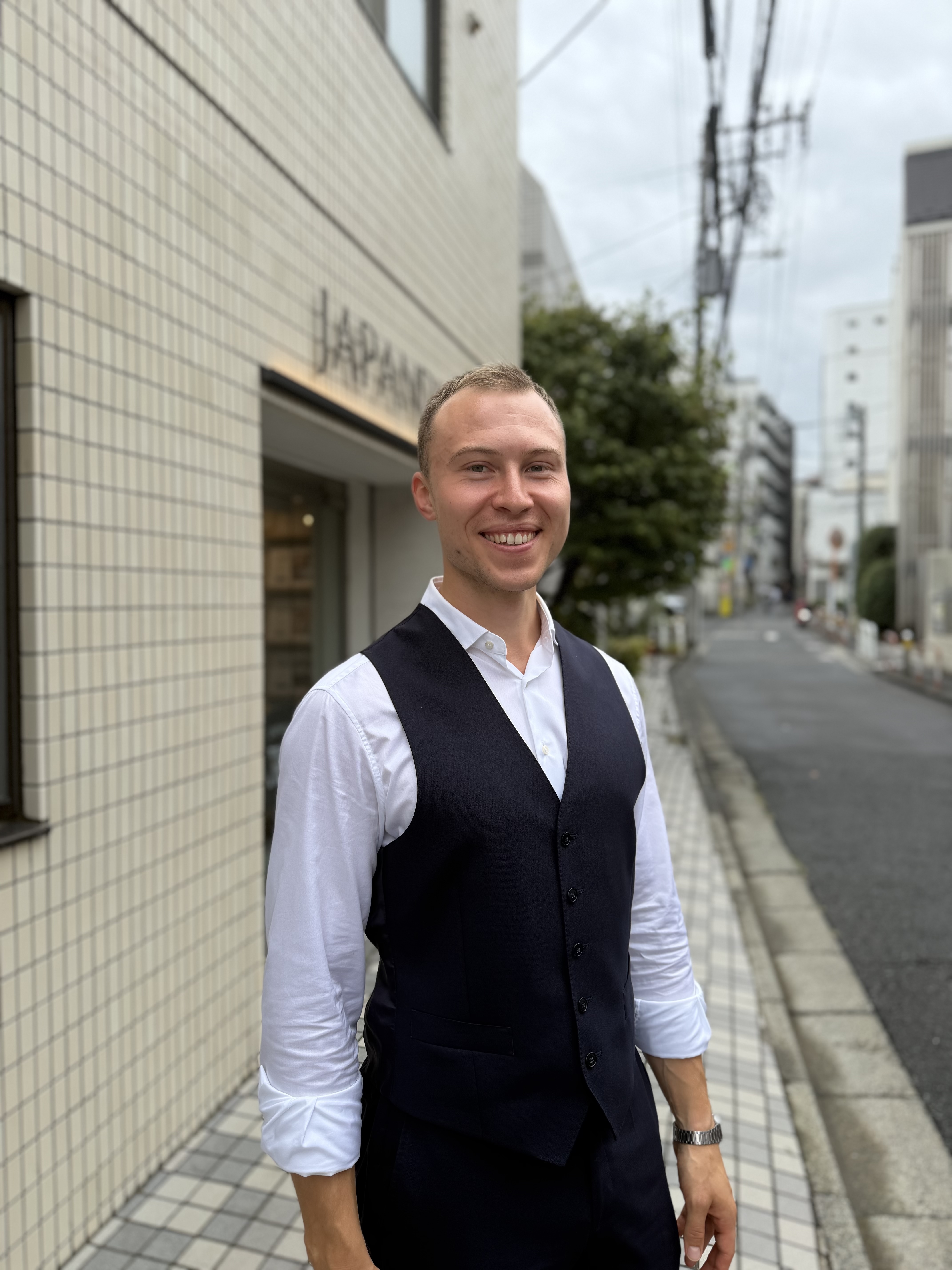
Axel Westholm is a Swedish student of forestry, wood technology, and sustainability, with a background in East Asian culture, history, and language. He is currently an intern at Japandi Real Estate.
Related Questions
Are Japanese houses earthquake safe?
Many are. Houses built under Japan's newer earthquake standards generally perform much better than older buildings. The key benchmark is whether a home was built after the 1981 New Earthquake Standard.
Why did you move to Japan?
What began as curiosity became a passion for Japanese homes and architecture — and the opportunity to build a life and business here.
Do I need a visa to buy property in Japan?
No. Property ownership and residency are completely separate in Japan. You do not need a Japanese visa to own real estate.
Can foreigners own land in Japan?
Yes. Foreigners have the same land and property ownership rights as Japanese citizens. There are no nationality restrictions on owning real estate in Japan.

Neighborhood Guide: The Best Places to Live in Tokyo
Choosing where to live in Tokyo often starts with choosing a ward. I compared five wards popular with foreigners: what each one is like, and what it actually costs to rent there in 2026.
Neighborhood Guide: The Best Places to Live in Tokyo

Tokyo Line by Line: Where to Live on the Toyoko
Choosing where to live in Tokyo typically starts with choosing a train line and a station. I spent a day visiting six stops on the Toyoko Line to see what each neighborhood is really like, and what it costs.
Tokyo Line by Line: Where to Live on the Toyoko

How to Buy an Apartment in Japan as a Foreigner: A Step-by-Step Guide
Foreigners can buy apartments in Japan, but the building matters as much as the unit. Learn how to judge fees, repair plans and financing before you buy.
How to Buy an Apartment in Japan as a Foreigner: A Step-by-Step Guide
Ready to find your home in Tokyo?
Buying and renovating a home in Tokyo can feel overwhelming from the outside — especially for international clients. We make it clear, considered, and design-led from the very first conversation.
- 01.One team guiding you through every step
- 02.A clear path from first search to final result
- 03.Homes chosen for potential, not just listings
- 04.Scandinavian design meets Japanese craftsmanship
- 05.A trusted network of architects, designers, and builders