How to Buy an Apartment in Japan as a Foreigner: A Step-by-Step Guide
Foreigners can buy apartments in Japan, but the building matters as much as the unit. Learn how to judge fees, repair plans and financing before you buy.


Two apartments in Tokyo can have the same layout, the same price and the same newly renovated kitchen, but the purchase is completely different.
One is in a building with solid savings, an owners’ association that gets things done and a clear plan for the next 20 years. The other is heading toward a large repair bill that no one has budgeted for.
From the listing, the two often look the same. So how do you tell them apart before you buy? And what do we look for when Buying an Apartment in Tokyo both for ourselves, but also for our clients?
That’s what this guide is about. And if you’re wondering whether a foreigner can buy real estate in Japan at all, the answer is yes. You don’t need citizenship, permanent residency or a visa.
When I first moved to Japan, I found it incredibly hard to find a rental that accepted my application. The pain points were the rental agreements, the ridiculous fees, and the simple difficulty of renting as a foreigner in Japan.
I planned to stay long term, so buying made more sense than renting. Buying an apartment in Japan means buying into a building, in a city I wanted to spend time in, so I took all my savings, went to viewings, and became a home owner in Tokyo.
If you’ve felt the same frustration with renting, this guide is for you. It’s also for anyone buying Japanese real estate for other reasons: a second home, a future base, an investment or a renovation project.
Before You Start: Cash or a Mortgage in Japan?
Before you look at a single listing, be clear on how you’ll pay. Will you buy with cash, or will you need a loan?
This matters more in Japan than many buyers expect. Getting a mortgage in Japan as a foreigner can be hard, especially if you don’t live here or don’t have permanent residency. Many banks won’t lend at all, and those that do often ask for a larger down payment.
The bank’s final review usually happens after you’ve signed the contract. If the loan is declined at that point, the deal can fall apart at th every last step. Depending on the contract, you could also lose your deposit.
So talk to lenders early, and get a pre-screening (jizen shinsa,事前審査) before you make an offer. Clear financing also makes your offer stronger, because sellers take a prepared buyer more seriously.
Step 1: Picture How You’ll Use Your Apartment in Japan
Start with the role the apartment will play in your life.
It could be a full-time home, a second home, a future base, a renovation project or a rental. There’s no single right answer, but your plans will shape the location, size, budget, renovation and management.
An apartment gives you less individual control than a house. The upside is that the roof, facade and shared systems are looked after together with the other owners. If you spend part of the year outside Japan, that can make a big difference.
If the apartment will sit empty for long periods, plan for:
• Regular checks and cleaning
• Mail and utility management
• Emergency access
• Insurance requirements
• A local contact who can respond quickly
An apartment that’s perfect for short visits isn’t always right for everyday life.
Step 2: Plan for the Full Cost of Buying in Japan
The asking price is only the beginning.
As a rule of thumb, transaction costs in Japan often add around 5–10% on top of the purchase price. Our breakdown of the actual closing costs on a ¥100 million home in Tokyo shows what that looks like in practice. On top of that, budget for:
• Brokerage fees, registration costs, taxes, insurance and professional fees
• Renovation, furniture and appliances
• Monthly management fees (kanrihi, 管理費) and repair-reserve fees (shūzen tsumitatekin, 修繕積立金)
• Annual property taxes and utilities
• Property management or tax support if you live abroad
Leave some room for surprises. Fees go up, and repairs come up. With a comfortable budget, you can judge apartments calmly instead of feeling pushed by the asking price.
Step 3: Choose the Area Before the Apartment
A beautiful kitchen is easy to fall for. But finishes can change,and the location can’t.
Think about your real routine. Do you need an easy airport connection, a direct train line, schools nearby, access to the sea or the mountains? Or simply a quiet street that feels good to come home to?
Online listings for Japanese real estate are a good place to start, but they rarely tell the whole story. Many of the best properties never getmuch attention online. A good local broker can explain what’s hard to see on ascreen. Our guide to REINS, Japan’s professional property listing network, explains how listings really work.
On Japanese listing sites, an apartment in a multi-unit building is usually called a mansion (マンション). An apāto (アパート) usually means a smaller, low-rise building, often built for renting.
You Don’t Have toFigure It Out Alone
Buying in Japan involves more people than most foreign buyers expect: the broker, the lender, the building manager, the judicial scrivener and the renovation team.
You don’t need to understand the whole system on day one. What matters is that you can always see:
• What has been confirmed
• What still needs an answer
• Who is handling each step
• When you need to make a decision or a payment
If you’d like to read more first, start with our guide to buying property in Japan as a foreigner.
Step 4: Experience the Building in Person
Photos show you the rooms. They don’t show you the walk home, how the building is cared for, or what the apartment sounds like at night.
If you can, spend some time in and around the building. Look at:
• The street and the walk from the station
• The entrance, lifts, corridors and notice boards
• Bicycle parking and the waste area
• Sunlight, noise and neighbouring buildings
• Whether the common areas are clean and well kept
• Any signs of delayed repairs
A fresh renovation makes a strong first impression, but it can’t fix a poor location or weak building management.
Pay attention to the common areas. A clean, well-run building usually has an owners’ association that works, and often healthy finances too. It doesn’t replace reading the documents, but it’s one of the first things I look at.
Your gut feeling will tell you a lot.
If you can’t travel to Japan for a viewing, ask someone local to show you the place live through face time.
Step 5: Understand What You’re Buying
Before you make an offer, check the apartment and the building. This due diligence saves a lot of uncertainty later.
Ownership
With most condominiums in Japan, you buy your own unit plus a share of the land and common areas. This isccalled kubun shoyū (区分所有), or sectional ownership.
The land right may be freehold (shoyūken, 所有権) or leasehold (shakuchiken, 借地権). With a leasehold, ask:
• Which type of leasehold it is
• How many years are left
• What ground rent you’ll pay
• How renewal works
• Whether approvals or extra fees apply if you sell or rebuild
Building Management
The documents aren’t the exciting part, but they often tell you more than the photos do. Ask for:
• Current management and repair-reserve fees
• The long-term repair plan (chōkishūzen keikaku, 長期修繕計画) and reserve balance
• Recent minutes from the owners’ meetings
• Major work already done or planned
• Planned fee increases or one-off payments
• House rules and the renovation guidelines
Low monthly fees look attractive. They can also mean too little has been saved for future work.
Don’t stop at the reserve balance. Look at upcoming repairs, unpaid fees, and whether the owners’ association (kanri kumiai, 管理組合) can actually make decisions when the building needs work. The meeting minutes usually show this clearly.
Once you own the apartment, you’ll be a member of the association and can attend and vote at the annual general meeting.
Age and Earthquake Standards
An older building isn’t automatically a bad choice. What matters is how it has been cared for and what the owners are planning next.
Japan introduced stricter earthquake standards (shin-taishin kijun, 新耐震基準) in June 1981. They apply to buildings whose building permit was approved after the change, not to those completed after it. A building finished in 1982 may still have been designed under the old rules, so always check the permit date.
The standard is a useful starting point, but it doesn’t tell the whole story. Look at it together with the maintenance history, any strengthening work and future repair plans.
An older building has had more time to build up its reserves. It may also be facing major repairs soon. Often both are true. Older apartments in Tokyo are also holding their value better than many buyers expect.
Renovation is on the rise in Japan, and many well-kept older buildings have beautifully renovated units.
What You Can Renovate
Before you picture new finishes, find out what you can actually change. Walls, pipes, drainage, flooring, soundproofing, air conditioning, permitted working hours and building approvals can all shape the project.
Windows often surprise foreign buyers. In most Japanese apartments, the windows and frames are part of the building’s common areas (kyōyō bubun, 共用部分), even though they’re part of your home. Replacing them usually needs approval from the owners’ association.
Start with what’s hard, or maybe even impossible, to add later: light, storage, ceiling height and how the rooms connect.
Then move on to the kitchen, bathroom, materials and finishes that will make the apartment yours.
Step 6: Make Your Offer(LOI)
When you find the right apartment, your first written offer is usually a purchase application or Letter of Intent (LOI), known in Japan as kaitsukeshōmeisho (買付証明書).
It tells the seller:
• The price you’re offering
• When you’d like to complete the purchase
• Whether you’re using a loan
• Any other important conditions
The LOI is normally non-binding, and you don’t usually pay a deposit at this stage. It opens a more serious conversation with the seller.
Price matters, but so does reliability. Sellers often prefer a buyer who is prepared, responsive and clearly able to complete the purchase.
Step 7: Review Everything Before You Sign
Once you and the seller agree on the main terms, the next step is the formal purchase contract.
Before you sign, a licensed real estate professional (takken-shi,宅地建物取引士) must take you through the Important Matters Explanation (jūyō jikōsetsumei, 重要事項説明). The name sounds formal, but the purpose is simple: to make sure you understand what you’re buying.
It helps to have a bilingual professional with you, which we at JAPANDI includes in our service, since our real estate specialists are bilingual.
This is your last chance to ask about:
• Ownership and land rights
• Management and repair-reserve fees
• Planned repairs and known issues
• House rules and renovation limits
• Deposit and cancellation terms
• The documents you’ll need for closing
When you sign, you normally pay a deposit (tetsukekin, 手付金), often around 5–10% of the price. What happens to it if the purchase falls through depends on the contract.
Don’t rush this step. Ask about anything that still feels unclear before you sign.
Step 8: Arrange Your Financing
If you’re using a loan, the bank usually does its final review after the contract is signed. That’s why it pays to sort out financing before you make an offer.
A Japanese bank looks at both you and the apartment: your residency status, income and documents, as well as the building’s age, the land rights and the unit size.
Keep in mind that the bank’s valuation of the property is rarely the same as the listed price, and it’s often lower, especially for older buildings. If a bank lends up to 70%, that usually means 70% of its own valuation, not of the asking price. Any gap between the two has to come from your own funds.
Buying with cash is simpler because there’s no loan approval to wait for.
If you’re buying with a loan, ask for a loan contingency clause (rōntokuyaku, ローン特約) in the contract. It usually lets you cancel and get your deposit back if the bank says no. Ask your broker exactly how it works and which deadlines apply.
Step 9: Close and Get the Keys
At closing, you pay the rest of the price and costs, the owner shiptransfer is completed, and you get the keys.
A judicial scrivener (shihō shoshi, 司法書士), a specialist in property registration, normally handles the ownership registration.
Before that day, your team should help you confirm:
• The final payment amount
• The documents you need
• Insurance and potential utility costs
• Management arrangements
• Whether you’ll attend in personor use a power of attorney
Buying an apartment doesn’t give you a visa or the right to live in Japan. Foreign buyers living overseas may also have extra steps, such as registering a contact person in Japan and filing reports under Japan’s foreign exchange rules. These rules keep changing, so make sure to check the current requirements.
Step 10: Make It Home
Buying the apartment is only the beginning. The journey starts once you have the keys.
First, arrange insurance, utilities, cleaning, security and any local management support you need.
If you’re renovating, work through the building rules, plumbing, soundproofing, ventilation and technical work before you choose finishes. Our 2026 renovation cost guide will help you plan the budget.
Get to know the house rules too. They often cover pets, musical instruments, home offices, balconies, parking, bicycles, storage, waste, quiet hours, renting out your unit and short-term rentals. Many buildings don’t allow short-term rentals at all.
Final Thoughts
The right apartment in Japan isn’t just a unit you love the first time you walk in. It’s a home in a building whose finances, rules and plans let you feel comfortable staying for years.
Start with the location. Understand the full budget. Check the building as carefully as the apartment.
Some of our international clients start out looking for a detached house and end up choosing an apartment. With the building’s management handling much of the maintenance, an apartment is easier to own from abroad.
Take the Next Step
Buying an apartment in Japan can feel overwhelming from abroad, but it doesn’t have to be.
JAPANDI helps foreign buyers with every part of buying Japanese real estate: the property search, local communication, building checks and renovation planning.
Tell us how you want to live in Japan, and we’ll build a purchase and renovation plan around the building, not only the apartment.
JAPANDI Real Estate – Buy a Home. Make it Yours.
Links to articles
https://www.japandirealestate.com/blog/why-is-renting-in-tokyo-so-hard-for-foreigners-and-what-to-do-about-it
https://www.japandirealestate.com/blog/what-is-reins-japans-private-property-listing-system-explained
https://www.japandirealestate.com/blog/closing-costs-buying-house-japan
https://www.japandirealestate.com/blog/how-to-buy-property-in-japan-as-a-foreigner
https://www.japandirealestate.com/blog/why-tokyos-older-apartments-are-becoming-more-valuable
https://www.japandirealestate.com/blog/how-much-does-a-renovation-cost-in-japan-2026-guide
Anton Wormann is a Swedish entrepreneur, real estate investor, and founder of JAPANDI. Based in Tokyo since 2018, he has specialized in investing in and renovating undervalued Japanese properties since 2019, helping international buyers navigate Japan's real estate market.
Related Questions
Can I borrow 100% of the purchase price in Japan?
Some Japanese residents qualify for loans covering nearly the full purchase price. Overseas buyers usually need a larger down payment or purchase fully in cash.
Can I buy property in Japan through a company?
Yes. Many investors purchase through a company for tax, financing, or investment reasons. The right structure depends on your goals, so it's worth discussing before you buy.
Can I buy property in Japan without living there?
Yes. You do not need to live in Japan to buy property. Many of our clients purchase from overseas, and transactions can be completed remotely using digital communication and a power of attorney when needed.
Can I get a mortgage in Japan as a foreigner?
Yes. Permanent residents can often access mortgage rates between 1–2%, depending on their situation. Overseas buyers can still obtain financing in some cases, though larger down payments and higher interest rates are common. We help clients understand what options may be available to them.
Can I refinance a mortgage in Japan later?
Yes. Many homeowners refinance if interest rates improve or their financial situation changes. Keep in mind that investment loans cannot always be refinanced into residential mortgages.
Can I use overseas income to get a mortgage in Japan?
Sometimes, but usually not. Some lenders accept overseas income, while many only consider Japanese income. It depends heavily on the specific bank and your profile.
Do I need a visa to buy property in Japan?
No. Property ownership and residency are completely separate in Japan. You do not need a Japanese visa to own real estate.
Does buying property in Japan give me residency?
No. Buying property does not grant residency or a visa in Japan. Ownership and immigration status are separate matters.
How does the buying process work in Japan?
The process usually runs: property viewing, offer, due diligence, contract signing, financing (if applicable), and settlement. Most purchases complete within one to two months. We guide clients through each stage from viewing to handover.
How much down payment do I need to buy in Japan?
It depends on your residency status, the bank, and the property. Japanese residents can sometimes borrow close to 100% of the purchase price, while overseas buyers often need a larger down payment (頭金) of around 30–50%.
Should I buy an apartment or a house in Tokyo?
Both have advantages. Apartments generally require less maintenance, while detached houses offer greater privacy, flexibility, and renovation possibilities.
What is the New Earthquake Standard in Japan?
Introduced in 1981, the New Earthquake Standard (新耐震) significantly improved Japan's building regulations. Many buyers use this year as a key benchmark, and some banks are more reluctant to finance homes built before it came into effect.

Neighborhood Guide: The Best Places to Live in Tokyo
Choosing where to live in Tokyo often starts with choosing a ward. I compared five wards popular with foreigners: what each one is like, and what it actually costs to rent there in 2026.
Neighborhood Guide: The Best Places to Live in Tokyo

Tokyo Line by Line: Where to Live on the Toyoko
Choosing where to live in Tokyo typically starts with choosing a train line and a station. I spent a day visiting six stops on the Toyoko Line to see what each neighborhood is really like, and what it costs.
Tokyo Line by Line: Where to Live on the Toyoko
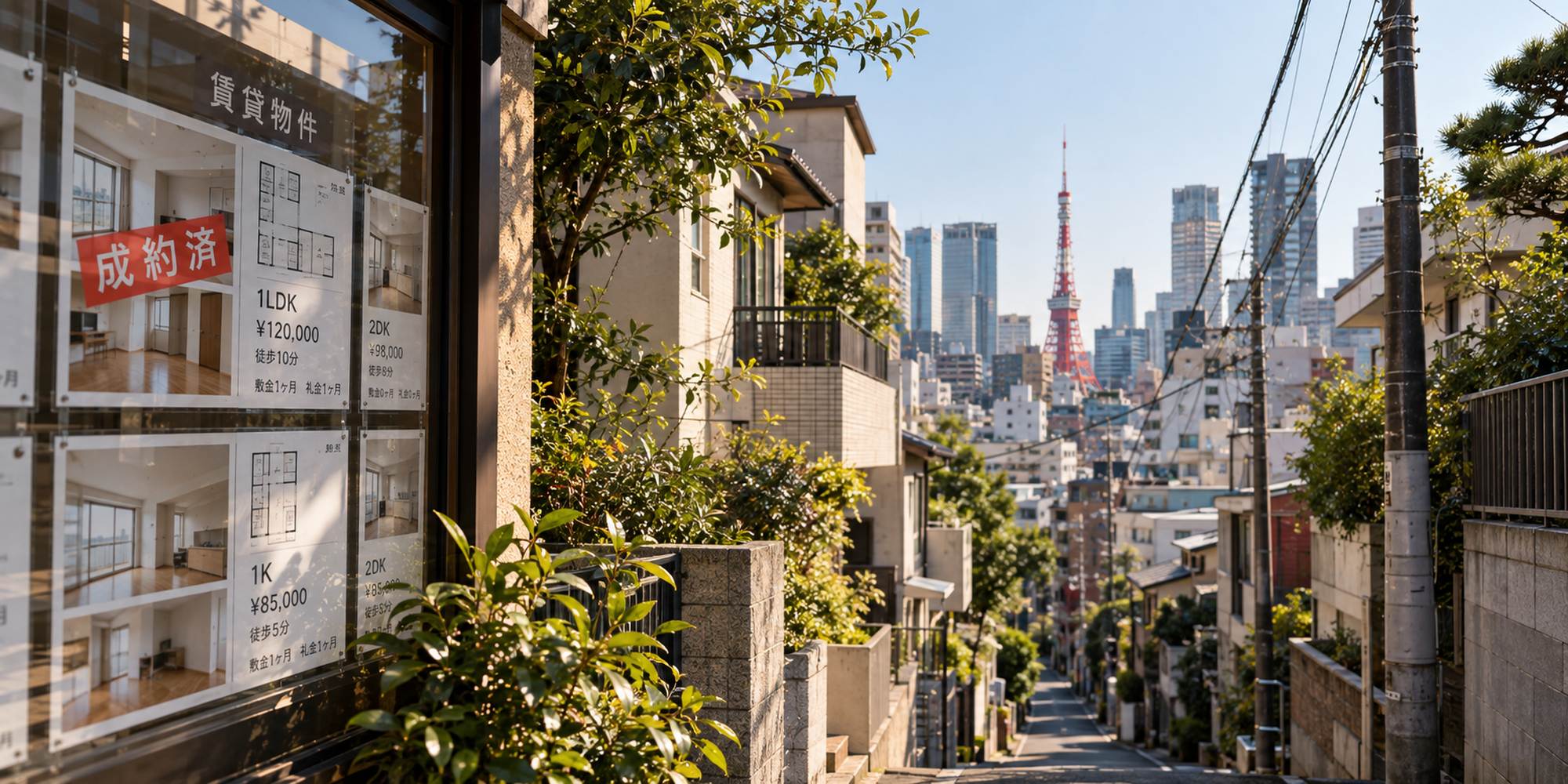
Why Renting in Tokyo is So Hard for Foreigners (And What to Do About It)
Fees, paperwork, guarantors, and apartments that vanish within days. What I learned trying to rent in Tokyo as a foreigner and working at a real estate company, and what to do when the standard route doesn't work.
Why Renting in Tokyo is So Hard for Foreigners (And What to Do About It)
Ready to find your home in Tokyo?
Buying and renovating a home in Tokyo can feel overwhelming from the outside — especially for international clients. We make it clear, considered, and design-led from the very first conversation.
- 01.One team guiding you through every step
- 02.A clear path from first search to final result
- 03.Homes chosen for potential, not just listings
- 04.Scandinavian design meets Japanese craftsmanship
- 05.A trusted network of architects, designers, and builders