What Is REINS? Japan's Private Property Listing System Explained
REINS is Japan's private real estate listing network used by licensed real estate companies. In this guide, we explain how REINS works, how it compares to the U.S. MLS, and why some properties never appear on public websites like SUUMO or LIFULL HOME'S.


What is REINS?
When I was first searching for our first house 20 years ago, I had no idea what Reins was.
My broker said it was only available to licensed real estate companies and sounded very mysterious.
REINS stands for Real Estate Information Network System, operated by four real estate information networks Corporate Entities (covering Eastern Japan, Chubu, Kinki, and Western Japan) designated by the Minister of Land, Infrastructure, Transport and Tourism, for the purpose to ensure fair and smooth real estate transactions.
REINS is a system available only to real estate companies that are members of designated real estate information networks, such as the Associations of Real Estate Transaction Business.
REINS is therefore not merely an advertising portal. It is part of Japan’s regulated real estate brokerage infrastructure.
What Is an MLS?
In the United States, a Multiple Listing Service, or MLS, is generally a local or regional cooperative database used by real estate professionals to share listing information and help match buyers with sellers.
There is no single nationwide U.S. MLS. Instead, multiple local and regional MLS organizations operate under their own participation rules, geographic coverage, data standards and technical systems.
MLS data is also widely distributed to consumer-facing websites through approved data feeds, including Internet Data Exchange, or IDX. This makes MLS-derived information much more visible to the public than the main REINS database.
The Fundamental Institutional Difference
REINS has a stronger statutory and administrative connection to Japan’s real estate brokerage system. The regional organizations operating REINS are formally designated by the national government.
A U.S. MLS is generally a privately governed professional cooperative, often operated by a REALTOR® association, a separately incorporated MLS organization or another regional entity. Participation is governed by the relevant organization’s rules, subject to federal and state law.
REINS is more directly embedded in a government-regulated brokerage framework, while an MLS is generally a private market-cooperation platform.
Who Can Access the Database?
REINS database is intended for licensed real estate companies. Members of the public cannot ordinarily create an account and browse all REINS listings independently.
The professional side of an MLS is also restricted to authorized participants. However, a large portion of MLS listing information is commonly made available to consumers through brokerage websites, agent websites and major property-search platforms.
The practical difference is that U.S. consumers usually see substantial MLS-derived data directly online, whereas Japanese consumers usually need a licensed real estate company to search REINS on their behalf.
REINS and Public Property Portals
REINS is completely separate from public property portals such as SUUMO, LIFULL HOME’S and at home.
Public advertising depends on the seller’s instructions, the listing broker’s marketing strategy, advertising permissions and portal costs.
And there is no publicly available official statistic showing what percentage of properties listed on REINS also appear on consumer portals such as SUUMO, LIFULL HOME’S or at home.
Therefore some REINS-listed properties remain visible only to licensed real estate companies and never show up on public portals and disappear (which means sold between real estate companies).
Information Contained in Each System
REINS information include the asking price, location, land and building area, floor plan, building age, construction type, zoning, road access, brokerage arrangement, availability status, advertising conditions and broker-to-broker remarks.
MLS listings may include similar property information together with tax records, school data, homeowners’ association information, showing instructions, listing history, days on market, photographs, virtual tours and detailed status changes.
Neither System Shows Every Possible Property
A property may be absent from REINS because it is marketed under an open brokerage arrangement without registration, sold directly by the owner, privately marketed, not yet registered or subject to restricted marketing.
A U.S. property may be absent from a particular MLS because it is sold directly by the owner, marketed privately, entered into another MLS, sold through an auction or institutional channel, or handled under an alternative listing option permitted by the applicable rules.
A professional database is essential, but it should not be assumed to be a complete catalogue of every property that might be available.
Conclusion
REINS and the U.S. MLS model share the objective of improving the exchange of property information among real estate professionals. Their structures, however, reflect different legal and commercial systems.
For overseas buyers, the practical lesson is that access to a knowledgeable licensed real estate company is particularly important in Japan. Public websites are useful for preliminary research, but they do not necessarily provide the same breadth of information that a professional can obtain through REINS.
Further, there are so many fake information created by AI and some private sellers put up fake properties just to get client inquires hoping they can show them other unsold properties. It is called Otori Koukoku(bait and switch), of course it is illegal.
Makiko Fukui is a licensed Japanese real estate broker with over 40 years of property investment experience across Japan, the United States, and Australia. She specializes in guiding international buyers through Japan's real estate market with deep local expertise.
Related Questions
What documents do I need to buy a house in Japan?
Cash buyers usually only need identification and proof of funds. For a mortgage, banks also ask for income documents, tax returns, visa information, and other financial records. Having your financial documents ready in advance can significantly speed up the process.

Neighborhood Guide: The Best Places to Live in Tokyo
Choosing where to live in Tokyo often starts with choosing a ward. I compared five wards popular with foreigners: what each one is like, and what it actually costs to rent there in 2026.
Neighborhood Guide: The Best Places to Live in Tokyo

Tokyo Line by Line: Where to Live on the Toyoko
Choosing where to live in Tokyo typically starts with choosing a train line and a station. I spent a day visiting six stops on the Toyoko Line to see what each neighborhood is really like, and what it costs.
Tokyo Line by Line: Where to Live on the Toyoko
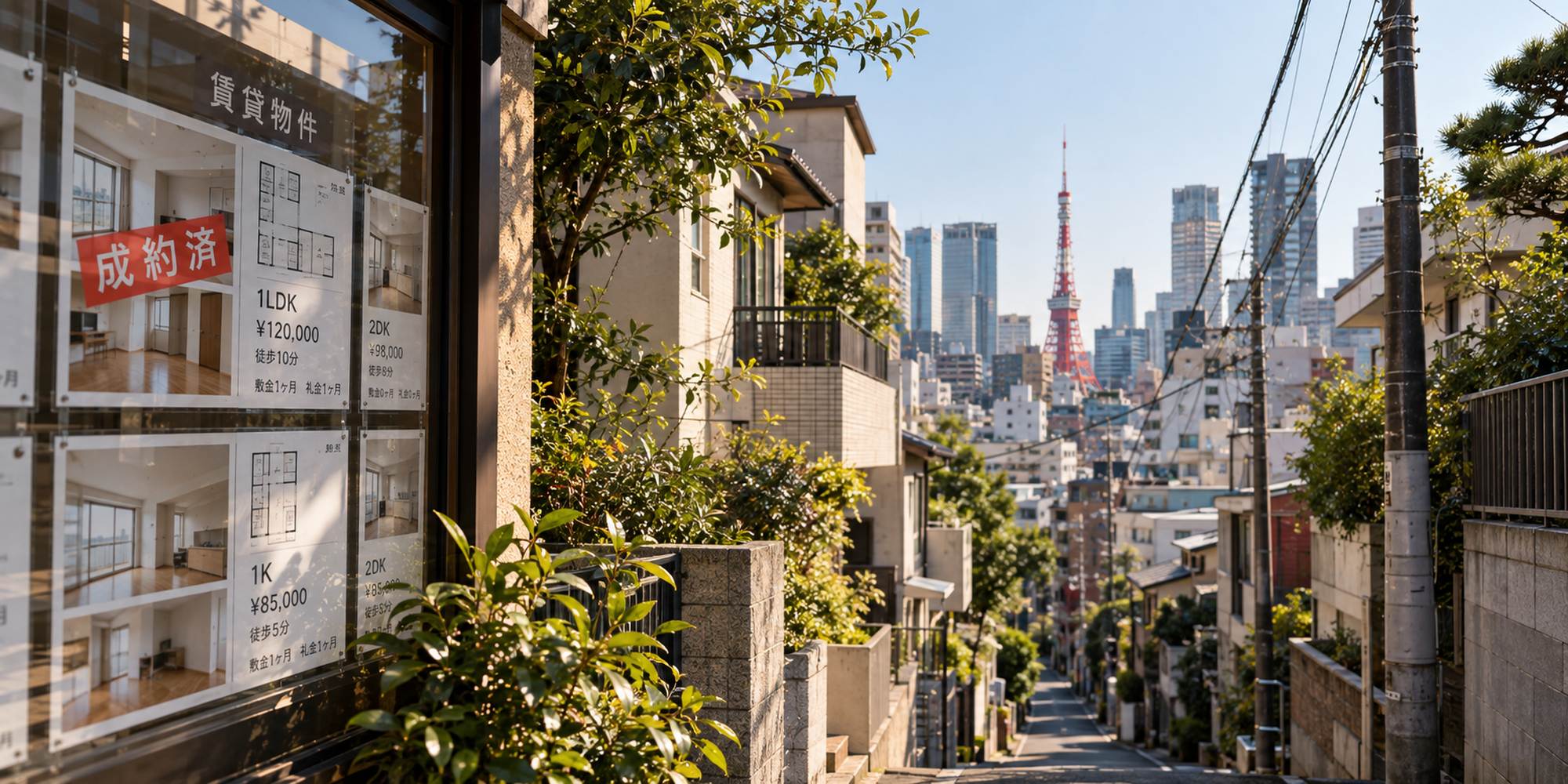
Why Renting in Tokyo is So Hard for Foreigners (And What to Do About It)
Fees, paperwork, guarantors, and apartments that vanish within days. What I learned trying to rent in Tokyo as a foreigner and working at a real estate company, and what to do when the standard route doesn't work.
Why Renting in Tokyo is So Hard for Foreigners (And What to Do About It)
Ready to find your home in Tokyo?
Buying and renovating a home in Tokyo can feel overwhelming from the outside — especially for international clients. We make it clear, considered, and design-led from the very first conversation.
- 01.One team guiding you through every step
- 02.A clear path from first search to final result
- 03.Homes chosen for potential, not just listings
- 04.Scandinavian design meets Japanese craftsmanship
- 05.A trusted network of architects, designers, and builders