Why Most Foreigners Overpay for Renovations in Japan
Why renovating in Tokyo is different from anywhere else — and what international buyers need to understand about budgets, craftsmanship, and communication before they begin.

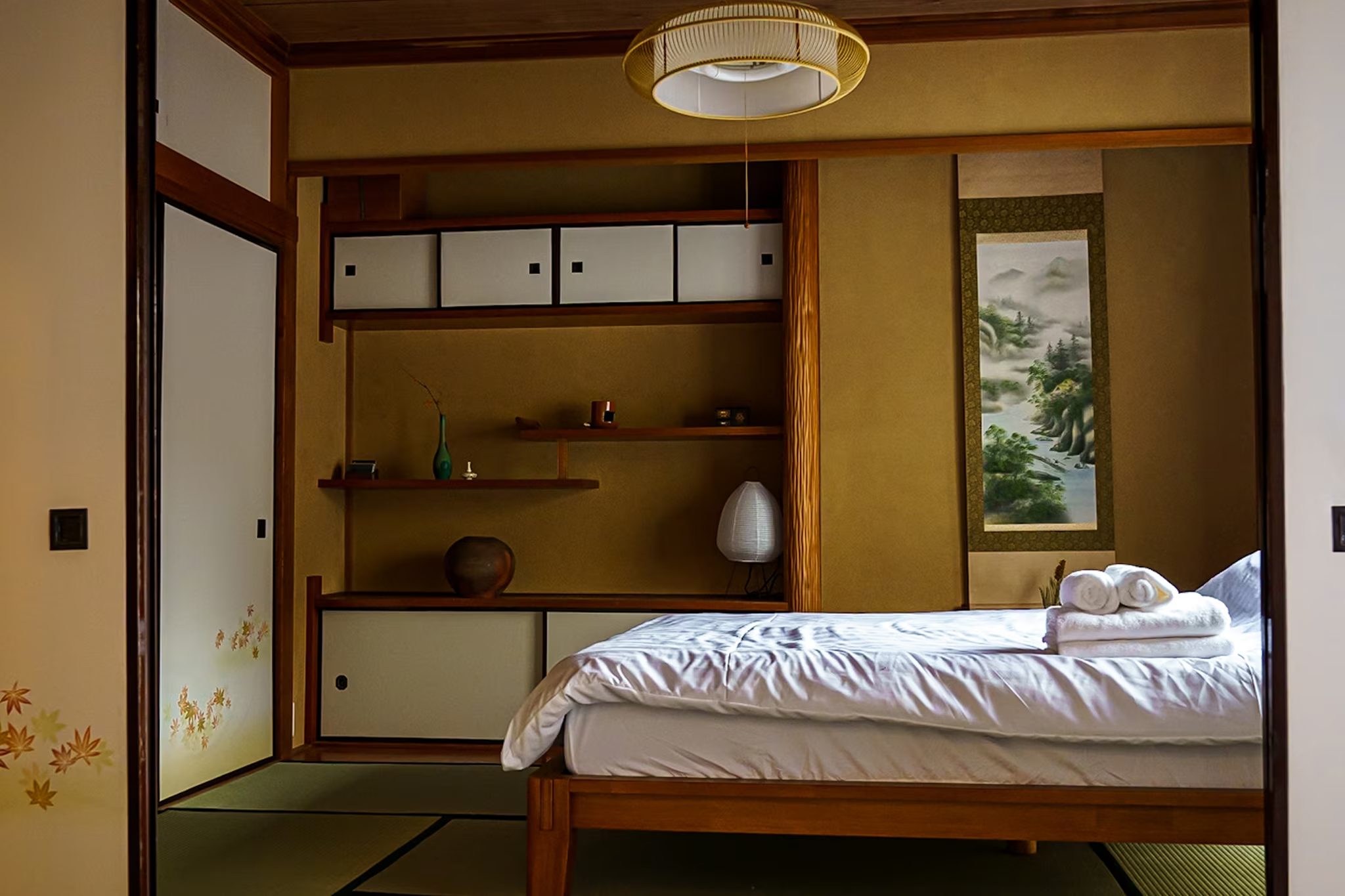
For decades, Japan has largely been a tear-down-and-rebuild culture.
Unlike many parts of Europe or North America, where renovating older homes has long been common, Japan historically placed far more value on building new. Many foreigners arrive with an image of Japan filled with traditional temples, kominka farmhouses, and centuries-old wooden homes. But anyone who has spent time in Tokyo knows that this is rarely the reality of the city itself.
Older homes in Japan were often seen as temporary structures rather than something to preserve and improve over generations.
But that is slowly beginning to change.
As real estate prices continue rising in Tokyo, labor shortages become more serious, and construction costs have nearly doubled in recent years, more people are starting to appreciate the value of existing spaces, thoughtful renovations, natural materials, and homes with character.
Sustainability concerns, limited land availability, and changing lifestyle preferences are all contributing to a growing renovation culture in Japan, especially in Tokyo where the population continues to grow.
At Japandi Real Estate, we are proud to be part of that shift.
After years of buying, renovating, and operating homes in Tokyo through Japandi Houses, we’ve seen firsthand how exciting the opportunities can be. But we’ve also seen how easy it is for foreign buyers to overpay, overbuild, or underestimate the complexity of buying and renovating in Japan.
Most of the time, this does not happen because someone is trying to take advantage of you.
It happens because of differences in expectations, communication, planning, and culture.
Renovating in Japan Is Different
Many foreigners arrive in Japan assuming renovation works similarly to back home.
In reality, the process can feel very different.
Japanese construction culture tends to prioritize:
- Detailed planning
- Clear hierarchy
- Long-term relationships
- Predictability
- Respectful communication
- Careful execution
At the same time, many foreign buyers prioritize:
- Speed
- Flexibility
- Heavy customization
- Fast decision making
- Open-ended creativity
Neither approach is wrong. But when expectations are not aligned from the beginning, projects can quickly become stressful, delayed, or far more expensive than expected.
One of the biggest mistakes we see is buyers jumping into renovations emotionally before fully understanding the practical realities behind the walls.
Many people fall in love with renovation visually before understanding it financially.
A beautiful before-and-after video online rarely shows:
- permit delays
- hidden water damage
- demolition costs
- trash disposal fees
- structural reinforcement
- material lead times
- labor shortages
- or the months of planning behind the scenes
Importing materials from abroad because they seem cheaper can also become surprisingly expensive in Japan.
A designer sink imported from Italy might look beautiful online, but if your contractor normally installs domestic products, that “cheap” imported sink could take a full week to adapt and install instead of a few hours. Meanwhile, the rest of the renovation timeline slows down around it.
Is that sink really worth one fifth of your renovation budget?
These small decisions add up quickly.
Another thing many foreigners underestimate is how specialized the Japanese construction industry is.
In many countries, a general contractor may handle a little bit of everything. In Japan, trades tend to stay very strictly within their own niche.
The carpenter focuses on carpentry.
The painter focuses on painting.
The wallpaper installer focuses on wallpaper.
The flooring specialist installs floors.
This system often creates incredibly high-quality craftsmanship, but it also means that coordination becomes much more important. Small design changes or imported materials can affect multiple trades and timelines very quickly.
Even throwing things away in Japan can become a project of its own.
Removing old kitchens, bathrooms, flooring, furniture, concrete, or construction debris in Tokyo can become surprisingly expensive very quickly, especially with strict sorting rules, disposal regulations, labor costs, and limited truck access in dense neighborhoods.
Another thing that often surprises foreign buyers is that, in some cases, it can actually be easier and more efficient to do a full skeleton renovation rather than trying to preserve too much of the existing interior.
In Japan, demolition teams can sometimes strip an apartment down to its concrete shell in just a single day.
While this might sound extreme at first, it often gives you a much clearer understanding of the space and what is realistically possible.
Once the walls and ceilings are removed, you can properly see:
- the condition and shape of the beams
- ceiling heights
- existing plumbing routes
- ducting possibilities
- structural limitations
- what can and cannot realistically be moved
This stage is usually where the real design process begins.
Many layouts that seem impossible on paper suddenly become possible once the space is opened up, while other ideas that looked easy online quickly reveal themselves to be extremely complicated or expensive in reality.
This is also why flexibility during the renovation process is important. Some of the best solutions are discovered only after demolition begins.
A beautiful old apartment or house may still require:
- New plumbing
- Updated electrical systems
- Insulation improvements
- New double-pane windows
- Structural reinforcement
- Mold remediation
- Roof repairs
- Waste disposal and demolition costs
These costs often surprise buyers.
What many people underestimate is that renovation in Japan is not simply about construction.
It is about coordination, communication, and understanding how Japanese building culture works.
A good renovation is rarely the result of one big decision. It comes from hundreds of smaller decisions made correctly over time — balancing budget, materials, craftsmanship, timelines, and expectations.
“Cheap” Often Becomes Expensive
Another common mistake is choosing the cheapest contractor or lowest renovation quote.
In Japan, craftsmanship and coordination matter enormously. A cheaper quote can sometimes mean:
- Lower-quality finishes
- Communication difficulties
- Limited project management
- Poor long-term durability
- Delays later in the process
Renovation projects almost always go over budget to some degree, and often take longer than expected as well.
Even though Japanese renovation companies are usually extremely organized and detail-oriented, delays still happen here too. Labor shortages, material availability, and custom manufacturing timelines have become increasingly challenging in recent years.
This is why having a realistic budget from the start is critical.
Not just:
“How much do I want to spend?”
But:
“What is realistically possible within this budget?”
The earlier this is discussed clearly, the smoother the process usually becomes.
What Actually Creates Value?
In our experience, some of the best value in Tokyo renovations comes from improving:
- Natural light
- Layout and flow
- Ceiling height
- Storage
- Balcony direction
- Material quality
- Warmth and atmosphere
- Functionality for everyday life
Not necessarily from making a home bigger or more luxurious.
In Japan, many buyers still emotionally associate “brand new” with safety, cleanliness, and reliability.
But that mindset is slowly evolving as more people begin appreciating thoughtful renovations and well-located older homes with character.
Some of the most attractive spaces in Tokyo today are not brand-new developments, but older properties that have been carefully redesigned with intention.
Another important factor many foreign buyers overlook is Japan’s earthquake regulations and how much building standards have changed over time.
Properties built after the newer seismic standards introduced in the 1980s are generally viewed much more favorably by both buyers and banks. For many years, Japanese banks were also very hesitant to finance older properties at all, including heavily renovated ones, simply because of the age of the building.
That is slowly beginning to change.
As renovation culture continues growing in Japan, more banks are starting to provide loans for older properties as well, particularly for Japanese buyers and foreigners with long-term residency or stable visa status in Japan.
As a result, many buyers are now prioritizing larger, thoughtfully designed apartments in great locations — sometimes even at premium prices — rather than buying something simply because it is brand new.
This shift is one of the reasons why thoughtfully renovated older homes in strong Tokyo locations are becoming increasingly attractive long-term assets.
Materials Matter More Than Most People Think
One of the most overlooked aspects of renovation in Japan is material selection.
The difference between a renovation that feels timeless and one that feels temporary often comes down to materials, texture, proportion, and light.
This is also where trust becomes extremely important.
Working with a director, architect, or renovation partner you genuinely trust can completely change the outcome of a project. Not only aesthetically, but emotionally as well.
Renovations involve hundreds of small decisions over many months. Decision fatigue is real, especially when working across languages and cultures.
Good partnerships matter.
At Japandi Real Estate, we often help guide clients through these conversations, helping bridge expectations between international buyers and Japanese contractors, designers, and builders.
In many ways, renovation in Japan is not just about construction.
It is about translation.
Not only language, but culture, communication, expectations, and process.
Don’t Burn Bridges
One of the most important things we’ve learned over the years is that relationships matter deeply in Japan.
Respect, patience, and clarity go a long way.
Aggressive negotiation styles, rushed communication, or constantly changing direction can quickly damage trust and create unnecessary friction during a renovation project.
The best projects are collaborative.
The goal is not simply to “get the cheapest deal,” but to create something thoughtful and long-lasting together.
A New Appreciation for Renovation in Japan
For a long time, Japan looked primarily toward new construction.
But today, a new appreciation for renovation, craftsmanship, adaptive reuse, and existing architecture is beginning to emerge.
Some of the most exciting homes, cafés, hotels, and spaces in Tokyo today are renovated properties with history, warmth, and personality.
We believe some of the best opportunities in Tokyo today are not found in brand-new developments, but in older spaces with strong fundamentals that can be thoughtfully transformed over time.
Not simply to buy property in Tokyo.
But to buy well, renovate thoughtfully, and create long-term value.
If you are interested in buying and adding value to a home in Tokyo, feel free to send us a message.
Anton Wormann is a Swedish entrepreneur, real estate investor, and founder of JAPANDI. Based in Tokyo since 2018, he has specialized in investing in and renovating undervalued Japanese properties since 2019, helping international buyers navigate Japan's real estate market.
Related Questions
What is the biggest renovation mistake?
Spending money on finishes before fixing the layout. A beautiful kitchen won't compensate for a home that doesn't function well.
Should I buy a renovated home or renovate myself?
If you want a home that's truly yours, renovating often provides better value and a better end result than buying someone else's renovation. It's a long process, but a rewarding one.

Neighborhood Guide: The Best Places to Live in Tokyo
Choosing where to live in Tokyo often starts with choosing a ward. I compared five wards popular with foreigners: what each one is like, and what it actually costs to rent there in 2026.
Neighborhood Guide: The Best Places to Live in Tokyo

Tokyo Line by Line: Where to Live on the Toyoko
Choosing where to live in Tokyo typically starts with choosing a train line and a station. I spent a day visiting six stops on the Toyoko Line to see what each neighborhood is really like, and what it costs.
Tokyo Line by Line: Where to Live on the Toyoko
Why Renting in Tokyo is So Hard for Foreigners (And What to Do About It)
Fees, paperwork, guarantors, and apartments that vanish within days. What I learned trying to rent in Tokyo as a foreigner and working at a real estate company, and what to do when the standard route doesn't work.
Why Renting in Tokyo is So Hard for Foreigners (And What to Do About It)
Ready to find your home in Tokyo?
Buying and renovating a home in Tokyo can feel overwhelming from the outside — especially for international clients. We make it clear, considered, and design-led from the very first conversation.
- 01.One team guiding you through every step
- 02.A clear path from first search to final result
- 03.Homes chosen for potential, not just listings
- 04.Scandinavian design meets Japanese craftsmanship
- 05.A trusted network of architects, designers, and builders