Rental Yields in Japan: Why Cheaper Properties Offer Higher Returns
Japan’s housing market works the other way around from most countries. Here is what rental yields really look like in Tokyo, Osaka, Nagoya and the countryside, and why rent, not price growth, is the reason to buy.
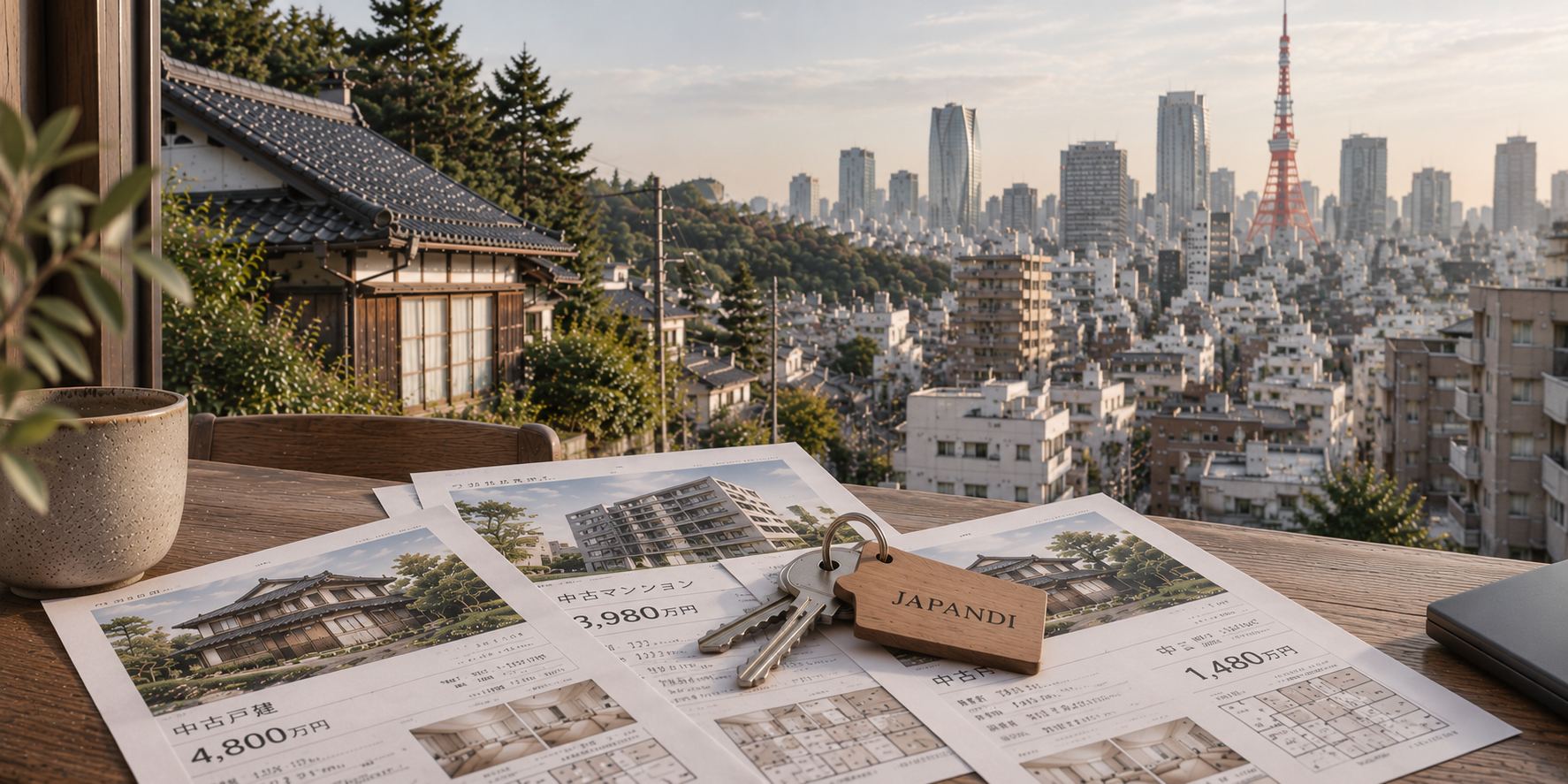
In Japan, you can buy a house in the countryside for the price of a used car, and some are even given away for free. Meanwhile, a small one-room flat in central Tokyo can cost as much as a family house in many parts of the US.
That sounds upside down, and in a way it is. If you buy a house in the US, you probably expect it to be worth more over time, and the rent is a bonus. Japan works the other way around. The building loses value every year, just like a car. But the land keeps its value, and the rent is the main reason to own it.
So where in Japan does the rent actually pay off? In this article, we look at rental yields across Japan, from Tokyo, Osaka and Nagoya to the countryside, and why the numbers behave so differently from what you're used to at home.
What yield means, and why Japan is different
"Yield" means how much money a home earns each year, compared with what you paid for it. If a ¥30 million flat brings in ¥1.5 million a year, the yield is 5%, gross.
In Japan, ads show the gross yield (表面利回り). That is the rent divided by the price, before any costs. What you actually keep is the net yield (実質利回り): the rent minus all the costs. For a Tokyo flat, the net yield is often 1.5 to 2 percentage points lower.
In short, a new flat in Tokyo earns a bit less than one in Osaka or Nagoya, and an old house in the countryside can earn far more on paper. But the highest number is not necessarily the best deal.
To understand why, you first need to understand how Japan's housing market works, because it runs the opposite way from what you are probably used to.
Japan has plenty of homes, even in Tokyo
In many big cities around the world, there are not enough homes. Look at Stockholm for example, where Anton comes from; people wait in long lines for a flat (the average waiting time is 9 YEARS to Rent an apartment), and prices go up because homes are hard to get. Scarcity. Japan is the opposite. It builds new homes all the time, and the rules for building are easier. Even Tokyo has more homes than people to live in them.
Why this matters to you:
- New homes keep rents in check. Rents can go up fast in popular areas, like central Tokyo right now. But Japan keeps building, so tenants can usually find another place. Over time, that stops rents from rising too far.
- The empty homes are in the wrong places. Most empty homes are old, small, far from a train station, or out in the countryside. A flat close to a station in central Tokyo finds a tenant fast. Where your building is, and how old it is, decides if it stays full or stands empty, among with other factors.
Just think about these numbers:
Tokyo has about 8.2 million homes. In 2023, about 900,000 of them (11%) were empty. In all of Japan, 9 million homes were empty. That is about 1 in 7 homes, the highest number ever.
And yet, Japan keeps building, even in a slow year like 2025, where builders started 740,667 new homes, of which about 325,000 were built to rent out.
Buildings lose value, land keeps it
In the US, a house that is well cared for usually becomes worth more. In Japan, the building is treated like a car. It loses value every year until it is worth almost nothing. Only the land keeps its value.
Japan's tax rules even put a number on it. A wooden house is said to last 22 years. A concrete apartment building is said to last 47 years. Banks and buyers use these numbers too. So a 25-year-old wooden house is often sold for the price of the land, minus the cost of tearing the house down.
Why does it work like this?
- How buildings are valued. Everyone expects buildings to lose value, so they are priced that way. Appraisers and tax rules give an old building almost no value, and buyers and sellers follow the same thinking.
- Buyers want new homes. Most Japanese buyers prefer a brand-new home, and there are always new ones to choose from. So old buildings have few buyers, although that is slowly starting to change in Tokyo.
- Safety. Japan has many earthquakes, and the building rules get stricter over time. The biggest change came in 1981. Older buildings feel less safe.
- Fewer people. Japan's population is shrinking and getting older, and young people move to the big cities. In the countryside, this leaves many houses that no one wants, which is a big reason there are so many akiya.
- Renovation and loans. Fixing up an old house costs a lot, and the work rarely raises its official value. Banks also lend less, and for shorter periods, on old buildings. That makes them harder to buy and to sell.
So what does this mean for you? First of all, as an investor, you buy for the rent and to hold long term. When Anton looks at a property here, he assumes the building will be worth a little less every year he owns it. If the price goes up anyway, that's a nice bonus, but it almost always comes from the land, the area, and not the building itself.
That's why the land matters so much. A house on its own plot keeps more of its value than a small flat, where you only own a tiny share of the land under the building.
It's also worth checking how the land is owned. In Japan, you can own a building without owning the land under it. With full ownership (所有権), the land is yours.
With a land lease (借地権), you only rent it. These homes are cheaper and their yields look better, but they are harder to sell, and some leases end with the land being given back. The banks rarely finance an old building on rented land, even in a good location.
Don't let the last few years fool you either. Tokyo flat prices have gone up for a long time because of inflation, cheap loans and buyers from abroad. That can change, and the buildings keep getting older either way.
There is one upside, though. In Japan's tax system, an old wooden building can be written off in as little as four years, which can lower the tax on your rent in the first years.
Yields by city: Tokyo, Osaka, Nagoya
You might expect a big difference between Japan's major cities. There isn't. According to a survey of large investors by the Japan Real Estate Institute, a brand-new rental building in Tokyo earns about 3.5 to 4% a year after costs. In Osaka and Nagoya, it's closer to 4.5%. That is lower than what many Americans are used to at home, at least in the city centers.
So why does Tokyo pay the least? Because investors see it as the safest bet. Rents there are rising faster than anywhere else in Japan, so buyers are happy to earn a little less today in exchange for more tomorrow. Osaka pays a bit more, with a bit more risk, and gets a boost from tourism. Nagoya is the quiet one: a factory city with steady demand but slow rent growth.
The listings you'll see as a private buyer often show higher numbers, around 5 to 7% on Japan's biggest investment property site, because they tend to be older and smaller buildings. And if you see a listing at 9%, there is almost always a reason, usually an old building far from a train station. A high yield is the market paying you to take a risk. It isn't free money.
What you actually keep: an example
Let's make this real. Say you buy a small one-room flat in central Tokyo for ¥30 million and rent it out for ¥120,000 a month. On paper, that's a 4.8% yield. Not bad.
Then the bills arrive. Every month you pay the building for upkeep and its repair fund. A local company takes a small cut for looking after the tenant. There's property tax and insurance, and every few years the flat sits empty while you find someone new. Add it all up and about 40% of the rent is gone. What's left is closer to 2.9% a year.
That's not a reason to walk away. It's a reason to always ask what you'll keep, not what the ad says. (These numbers are just an example. Every building is different.)
A few other things tend to catch foreign buyers off guard. Buying costs extra: agent fees, registration and taxes come to around 6 to 8% of the price, which eats up roughly your first two years of income. Building fees usually go up as the building gets older, so ask to see its repair plan before you buy. If you live outside Japan, part of your rent may be held back for tax until you file a Japanese tax return. And since everything is in yen, a swing in the exchange rate can matter as much as the rent itself.
Interest rates are rising, and so are rents
For years, borrowing money in Japan was almost free. That's changing. In September 2026, Japan's central bank raised its main interest rate to 1.25%, the highest in over 30 years. That still sounds low to an American, but it's a big shift for Japan, and home loans are getting more expensive.
You'll often hear that prices went up first and that rents will follow. In Tokyo, rents are already following. They have been hitting new records for months, and the rents asked for flats in central Tokyo are up more than 8% from a year ago.
But it isn't happening everywhere. Rents outside central Tokyo, and in cities like Fukuoka, Sendai and Kyoto, have dipped a little. And prices for used flats in central Tokyo have started to cool.
Two things work differently from the US. First, Japanese law strongly protects tenants who already live in your flat, so in practice you raise the rent when someone new moves in, not every year. Rising rents reach your pocket slowly. Second, if loans keep getting more expensive, buyers will pay less for property. Paying cash protects your rent, but not the price you get when you sell. Many landlords have already started implementing short term lease, teiki shakka, similar to commercial rents in order to bump the rent up to market rates when its time for a renewal.
Akiya and the countryside: big yields, lots of hidden work
On paper, the best yields in Japan are in akiya (empty houses) and country houses. You buy a house for a few million yen, fix it up and rent it out. Earning 20 to 30% a year, or more, is possible, but it requires a lot of work for those extra tens of thousands of yen a month.
But that number leaves out your time. You have to find the house, You deal with the local agent and the neighbors, You manage the builders, You fix what they got wrong, and find tenants in a town where people are moving away. You don't get paid for any of those hours. I have yet to see anyone do this well without living in Japan full time.
There is one more risk, and that risk is selling. Country houses in Japan can be almost impossible to sell, so the rent has to pay you back before you leave, because there may be no one to buy the house at the end.
Or, you aim at owning the property for your own use for a long period off time, so that the alternative cost of renting a property is outweighed.
If you don't live in Japan, buying a short-term rental that is already up and running is often a wise decision:
- The licenses are already done. The license decides if a short-term rental works. A home with a basic short-term rental license, minpaku, can only take guests 180 nights a year. A home with a hotel or inn license, ryokangyō kyoka, has no limit.
- It makes money from the first day. You buy a working business, and you can check its booking history.
- Someone already runs it. A company handles cleaning, check-in and messages with guests.
- You can use it yourself. Block out the weeks you want to stay there.
Of course, none of this comes for free. A place that's already up and running costs more to buy, and the company managing it will usually keep 20 to 30 percent of what it earns. Bookings also rise and fall with tourism, and the rules for short-term rentals have a habit of changing. So before you sign anything, find out exactly what kind of license the property has, look into the local rules, and ask to see at least two years of real booking numbers. Japan has a strong demand for tourism though, and I believe Tokyo will stay strong, as well as the "off the beaten path" in chosen countryside regions.
In Conclusion
With $1M in cash, you could buy a few tiny flats in Tokyo, a small wooden apartment building in Osaka, or a short-term rental that is already running. Whatever you choose:
- Look at what you keep, not what the ad says. A Tokyo flat listed at 5% yield often leaves you closer to 3%.
- Expect the building to lose value. What you earn is the rent, plus whatever happens to the land.
- Choose a good location over a high yield. Close to a station, in a big city, where people keep wanting to live.
- Mind the currency. Your rent and your sale price are in yen.
- Talk to a tax advisor before you buy, not after.
the Yen is cheap at the moment, and if it gets stronger again a currency bump might give you a higher return in the future when your funds are converted back to USD or EUR.
Take the Next Step
Finding a property with a good yield in Japan is hard from abroad. The best ones rarely stay on the public listing sites for long, and the number in the ad is only the start.
At JAPANDI, we help international buyers find, check and buy property in Tokyo, whether it's a home, a propertyl or a renovation project. Explore our properties and services at Japandi Real Estate, or get in touch and tell us what you're looking for.
Japandi Real Estate - Buy a Home. Make it Yours.
Sources
- Japan Real Estate Institute: 54th Real Estate Investor Survey, April 2026
- Kenbiya / LIFULL: Investment property market report, Jan–Mar 2026
- CNBC: Bank of Japan raises rates to 1.25% (Sep 18, 2026)
- Patience Realty: Tokyo condo asking rents exceed ¥5,000/m² (Tokyo Kantei, Sep 2026)
- Patience Realty: Tokyo rent index Q2 2026 (AtHome / Sumitomo Mitsui Trust)
- A-Realty: Japan house prices 2026
- Bunshun: Tokyo's 900,000 vacant homes (2023 Housing and Land Survey)
- Nippon.com / Jiji: Japan housing starts fall to 62-year low in 2025
- Boio: Stockholm housing queue, 2025 figures
Axel Westholm is a Swedish Forestry- and Wood Engineer fluent in Japanese, English and Swedish, supporting Real Estate operations and Content Creation.
Related Questions
Are free houses in Japan really free?
Not usually. Even 'free' houses typically require renovation, taxes, legal work, and ongoing maintenance. For a deeper look, read Anton's bestselling book, Free Houses in Japan, available on Amazon.
How do I make an offer on a house in Japan?
Once you've found the right property, we prepare a formal Letter of Intent and begin negotiating with the seller. Unlike many countries, the asking price is not always the final price — understanding the seller's situation can make a significant difference to the outcome.
How does JAPANDI Real Estate work?
We help clients find the right property, negotiate the purchase, arrange financing where possible, and guide the renovation from start to finish — a single team across the whole journey.
Is buying better than renting in Tokyo?
It depends on your plans. If you're staying long term and find the right property, buying can often make financial sense — and in some neighborhoods it can even cost less than renting.
Is Japanese real estate a good investment?
It depends on the property. We believe buying the right home in the right location creates the best long-term value. Tokyo is constantly changing, with new developments happening across the city.
Should I buy a new or used home in Japan?
We usually prefer well-located used homes with renovation potential. They often provide better value and more opportunities to create something genuinely unique.
Should I buy a renovated home or renovate myself?
If you want a home that's truly yours, renovating often provides better value and a better end result than buying someone else's renovation. It's a long process, but a rewarding one.
What can I buy in Tokyo for ¥200 million?
A ¥200 million budget opens the door to premium neighborhoods, larger family homes, and high-end apartments.
What rental yield should I expect in Tokyo?
Tokyo yields are usually between 3–5%, and sometimes lower in prime central areas. Returns vary widely depending on location, property type, financing, and whether the property is used for long-term or short-term rental.

Neighborhood Guide: The Best Places to Live in Tokyo
Choosing where to live in Tokyo often starts with choosing a ward. I compared five wards popular with foreigners: what each one is like, and what it actually costs to rent there in 2026.
Neighborhood Guide: The Best Places to Live in Tokyo

Tokyo Line by Line: Where to Live on the Toyoko
Choosing where to live in Tokyo typically starts with choosing a train line and a station. I spent a day visiting six stops on the Toyoko Line to see what each neighborhood is really like, and what it costs.
Tokyo Line by Line: Where to Live on the Toyoko
Why Renting in Tokyo is So Hard for Foreigners (And What to Do About It)
Fees, paperwork, guarantors, and apartments that vanish within days. What I learned trying to rent in Tokyo as a foreigner and working at a real estate company, and what to do when the standard route doesn't work.
Why Renting in Tokyo is So Hard for Foreigners (And What to Do About It)
Ready to find your home in Tokyo?
Buying and renovating a home in Tokyo can feel overwhelming from the outside — especially for international clients. We make it clear, considered, and design-led from the very first conversation.
- 01.One team guiding you through every step
- 02.A clear path from first search to final result
- 03.Homes chosen for potential, not just listings
- 04.Scandinavian design meets Japanese craftsmanship
- 05.A trusted network of architects, designers, and builders